Carlos Landaeta Meneses (Finaliste 2026) à L’Espace Périphérique, Paris



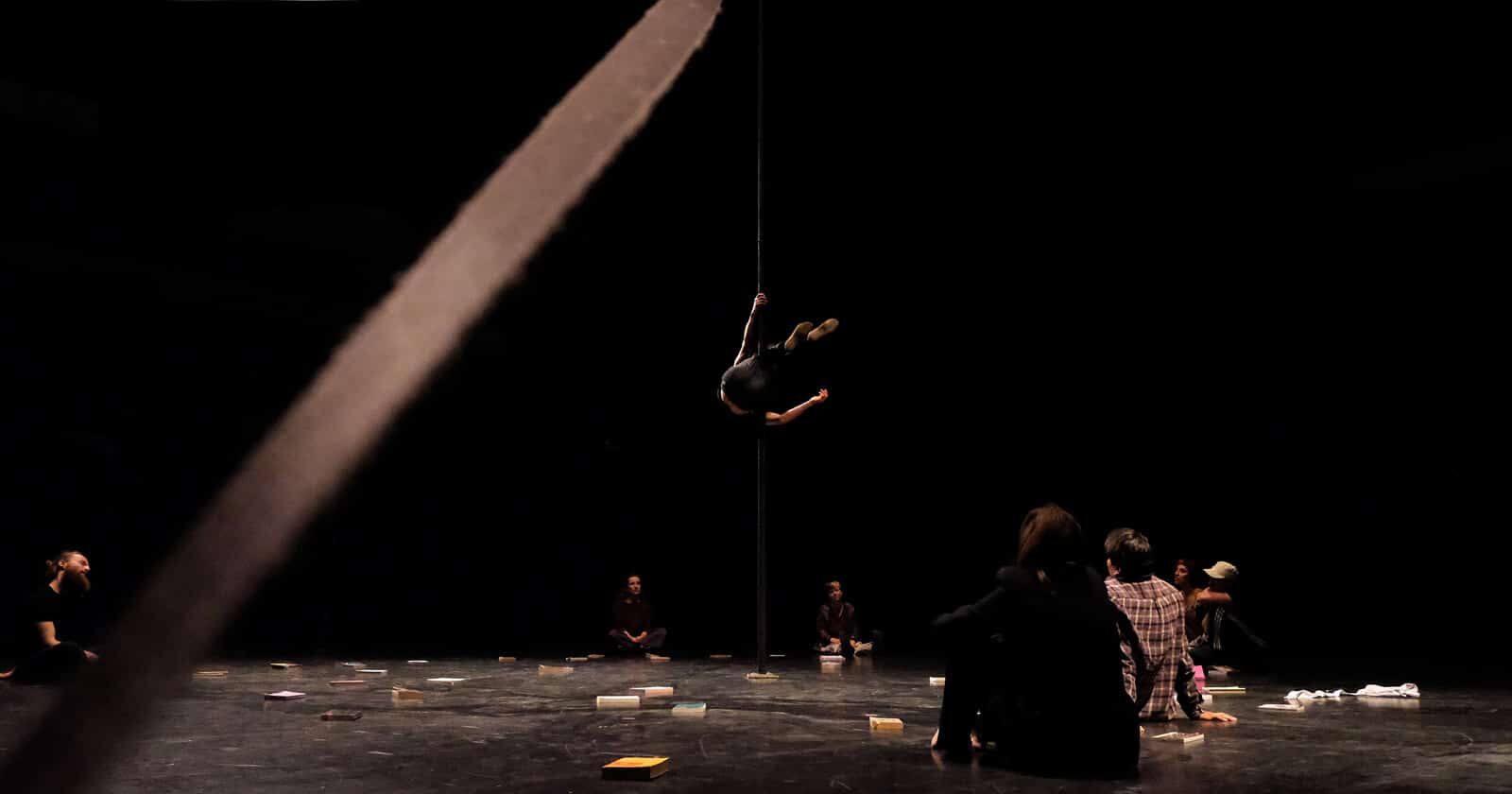
© Lula & Elsa
De nombreux livres sont disposés autour d’une personne aux membres engourdis, tous disponibles à la lecture. Face à ce corps endommagé, le spectateur est invité à découvrir ces ouvrages engagés et à les partager : montez sur scène, choisissez un livre, lisez à voix haute. Un corps sera là pour tenir le micro, juste pour vous. Blood Flow Reading Club offre cette expérience singulière, où peut s’élever à travers vous la voix de celles et ceux qui ont écrit en faveur des gens discriminé·e·x·s. Interrogeant les limites du corps, cette performance invite le spectateur à poser son regard sur les actes de violence, les voix qui sont tues. C’est la figure du subalterne qui sera entendue.
Basé·e à Bruxelles, Carlos Landaeta Meneses est né·e à Caracas au Venezuela ; un très bel endroit, violent, qui lui a enseigné beaucoup de choses. Un endroit où la compassion et l’empathie ne sont pas seulement des pratiques quotidiennes, mais des besoins vitaux. Carlos cherche toujours à apprendre de nouvelles choses comme la danse, les langues, le clown, les arts martiaux et tout ce qui peut être utile, ou inutile.
En France, il/elle suit une formation au Centre régional des arts du cirque de Chambéry, puis obtient une licence de cirque à Bruxelles avant de travailler pour des compagnies de cirque. Aujourd’hui, Carlos se consacre à la pédagogie du cirque, à des laboratoires de recherche artistique et anime des ateliers sur le thème du décolonialisme et des relations de pouvoir.
Carlos aime la couleur entre le bordeaux et le magenta. Et la plupart du temps, il/elle a peur des gens qui prétendent que « tout va bien tout le temps ».
Sortie de résidence – Lundi 18 mai à 17h
L’Espace Périphérique – 2 rue de la Clôture, 75019 Paris
Inscriptions : reservation@circusnext.eu
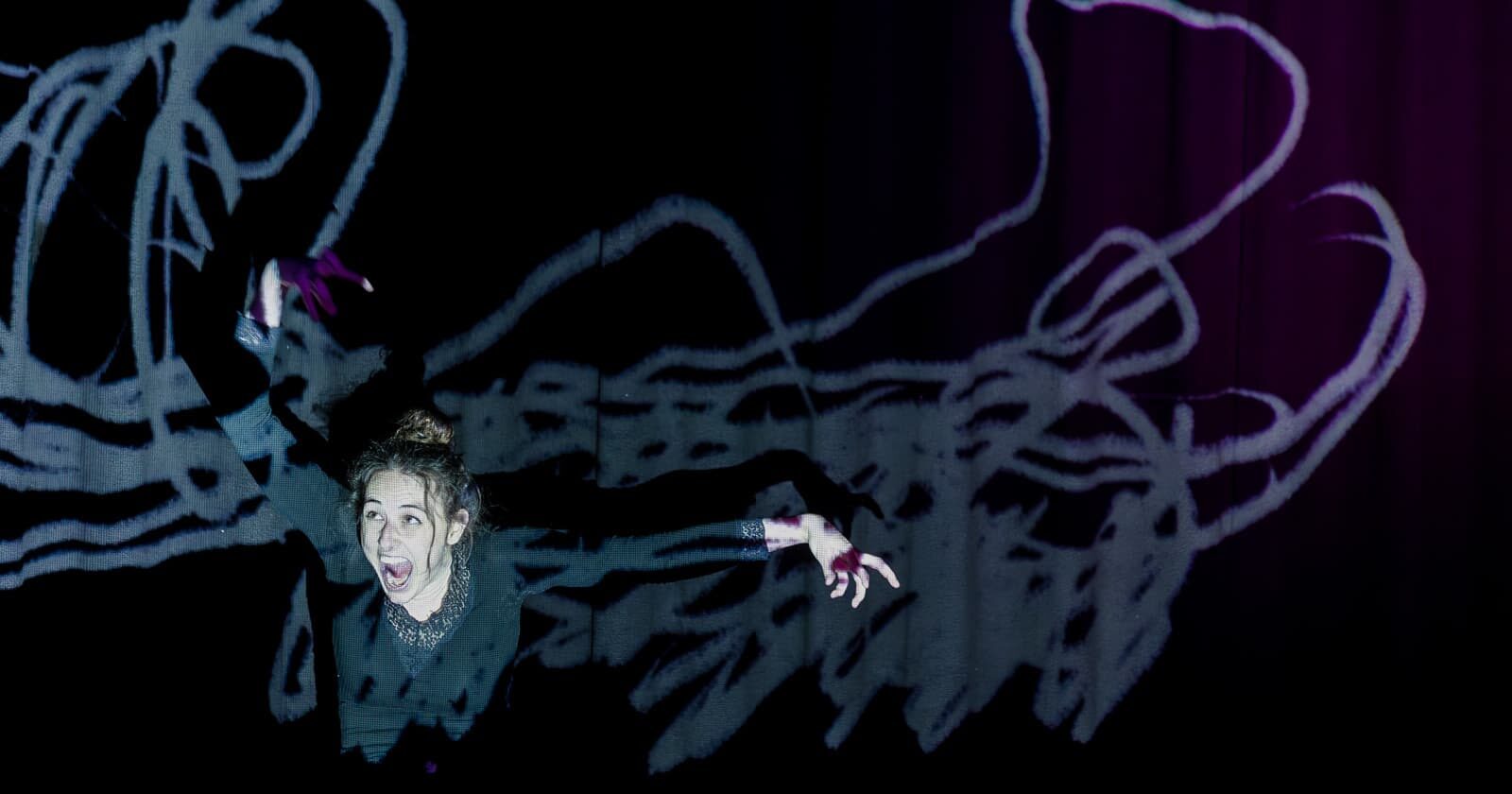

Corvus Obscura est une recherche en cirque contemporain qui explore les espaces intermédiaires, les plans, les perspectives. Elle mêle mouvement, trapèze, dessin en direct, manipulation d’objets, butô et musique expérimentale.
Cette recherche est fondée sur l’idée d’une harmonie métaphysique, et du chemin qui y mène. Elle interroge les relations entre l’ombre et la lumière, la hauteur et le sol, la dysharmonie et l’harmonie, le micro et le macro, le monde visible et l’intériorité.
L’intention est d’épurer la scène pour en faire un espace de jeu minimaliste et clair. Elle est alors animée par la projection spatiale de dessins, en temps réel et noir et blanc, offrant un nouveau regard sur le visible, entre imaginaire et fantasmagorie.
Temple O.A. est composé de deux créateur·rices : Petra Najman et Ivan Svaguša.
Petra est artiste de cirque trapéziste, formée en France et en Italie. Elle travaille dans les domaines du cirque contemporain, du théâtre physique et du butô. Elle est l’autrice de la pièce My Death and Me.
Ivan est artiste interdisciplinaire et enseignant, initialement peintre académique. Sa pratique englobe la peinture, l’illustration, le street art, la bande dessinée, l’animation, la musique et la performance. Son travail vise à réunir les arts visuels, sonores et performatifs.
Ensemble, ils créent la pièce interdisciplinaire Crow Without a Nest accompagnée d’un livre illustré et d’une exposition, dont la première est prévue pour 2025. De cette œuvre est né un nouveau projet, Corvus Obscura, actuellement en développement. Ils y explorent la mise en scène, la chorégraphie, la dramaturgie, la conception visuelle et le travail sonore.
Sortie de résidence – Lundi 20 avril à 17h
L’Espace Périphérique – 2 rue de la Clôture, 75019 Paris
Inscriptions : reservation@circusnext.eu

© Christophe Raynaud de Lage – Maison de La
En 2026, les 10 projets Finalistes circusnext bénéficient d’un Lab chez un partenaire européen pour travailler collectivement sur leurs créations.
Un soutien clé qui permet aux artistes de bénéficier de :
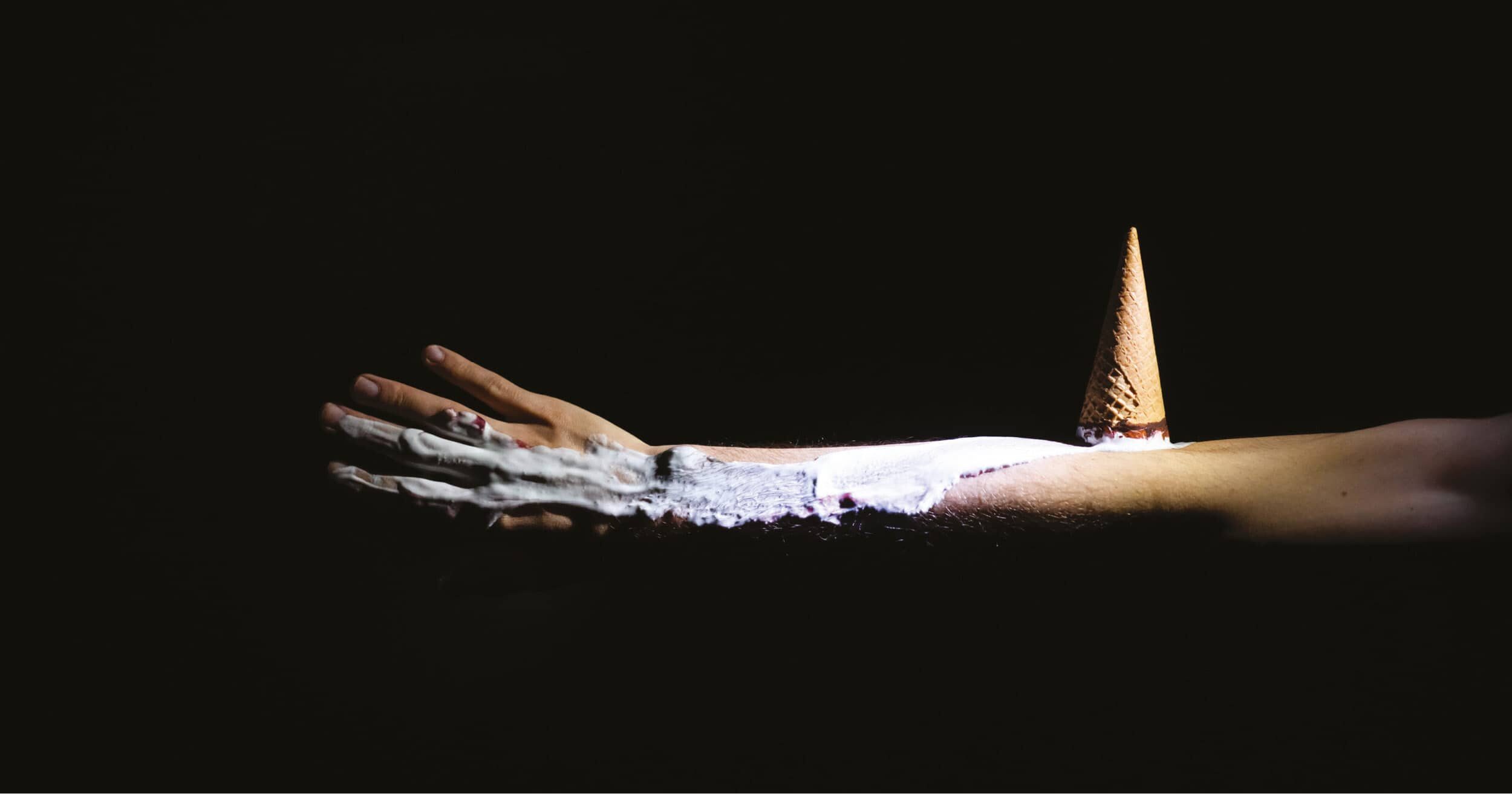

Carlo Cerato, artiste circassien italien, est un jongleur et manipulateur d’objets dont le spectacle solo Llabyellov a été sélectionné au 42ème festival mondial du Cirque de Demain en 2023.
Anneaux, bâtons, balles, plumes de paon, glaces à l’italienne, cubes, foulards… préparez-vous à une performance de jonglage en quatre chapitres, quatre costumes, quatre couleurs ! Un collage abstrait d’explorations de jonglage, mais aussi de musique électronique, silence, lumières, blagues, beaucoup de blagues, le tout très très proche du public.
Carlo Cerato découvre le cirque à l’âge de 11 ans. Il étudie à la FLIC en 2015 puis au CNAC dont il sera diplômé en 2019. Il crée avec Léon Volet et Ramiro Erburu la compagnie EDO Cirque, lauréate circusnext 2021. En 2020, il crée le solo Llabyellov puis travaille comme regard extérieur pour le duo LAR de Davide et Mattia Bonetti en 2022. Il travaille aujourd’hui sur son nouveau projet ASTRAT prévu pour 2026.
16 octobre 2025 · 12h30
Durée : 40 min · Dès 6 ans
Le Vellein – Scènes de la Capi · Salle de L’Isle
Tarif MIDI 30 : de 10€ à 14€ · Billetterie


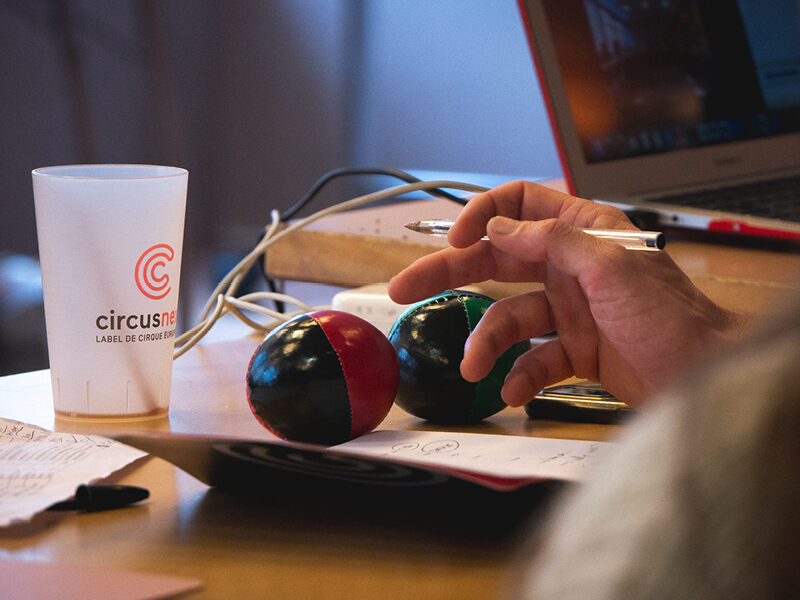
Un jury composé de partenaires européens et d’artistes se réunira du 24 au 26 septembre 2025 à Tollhaus, Karlsruhe en Allemagne pour désigner les 10 Finalistes de l’édition 2026 circusnext Platform.

Les 10 Finalistes bénéficieront du soutien de circusnext et des lieux partenaires européens (coproduction, laboratoires, résidences, présentations d’étapes de travail, formations) et participeront à la dernière étape de sélection en septembre 2026 : la Sélection des Lauréat·es au Théâtre de la Cité internationale (Paris, France).

None found
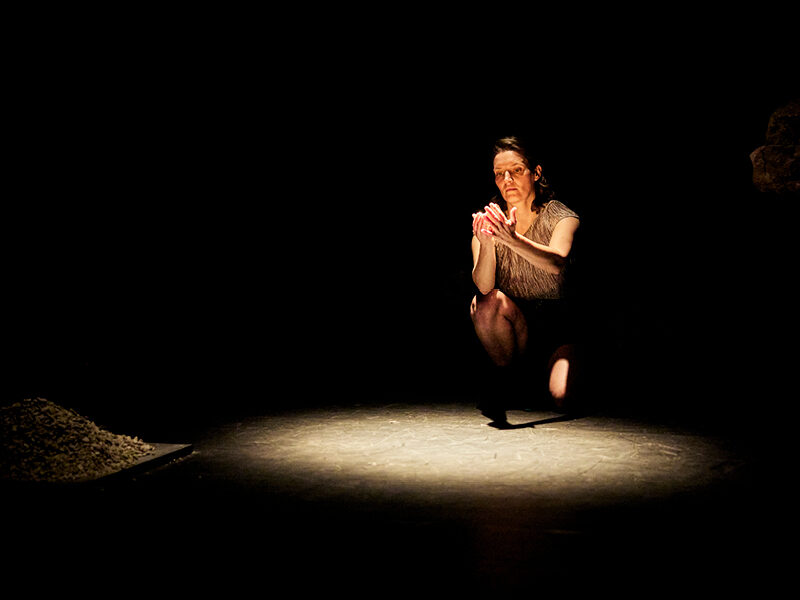
INTERVIEW. Maison Courbe, Le Bruit des Pierres – En collaboration avec Around About Circus

Le Bruit des Pierres by Maison Courbe: for a necessary ecology through the live arts. By Valentina Barone.
How can we heal our complicated relationship with matter? From the presence of stones, we could learn the humility of serving the living, without being bothered by the passing of time. In Le Bruit des Pierres – which we can translate as The Sound of Stones – circus and visual arts blend. Pebbles, rocks, and crystals become partners and suspension apparatus. Chalk underlines gesture and space while edible crystals crunch, and percussive stones fill the sound space as scenographic and dramaturgical elements. For this circusnext series of interviews, we engaged with part of Maison Courbe, a French collective supporting the fascinating creation process of a show connecting France and Brazil. In a conversation with the three co-authors; the visual artist Domitille Martin, the circus performer Nina Harper and the performing artist-researcher Ricardo Cabral, we discover more about their performance and understand that collapsing and suspended sculptures can co-exist on stage as living matters. In 2022, the project won the Croisements / Cruzamentos programme, a research residencies path in Brazil and France for artists of the two countries. Two years later, the trio is one of the circusnext laureates ready to debut at the TMG – Grenoble on the 13 and 14 of March 2025.
Valentina Barone: Before talking of Le Bruit des Pierres, could you give me a glimpse of Maison Courbe as a collective?
Nina Harper: Maison Courbe is a collective structure created in 2021 to support the artistic projects of Inbal Ben Haim, Léo Manipoud, Nina Harper, Domitille Martin and Kamma Rosenbeck. As young artists with circus and visual arts backgrounds, we met on shows combining different languages (with Cie Libertivore, Cie l’Attraction and IDEM Collectif, among others), and decided to build this shared house to host our projects.
Sometimes, it is necessary to be together to discuss ideas, support, confront, and help each other during our singular experiences. A mutual structure allows you to mutualise funding and share reflections on creating something together, but that can grow in different directions. We also care about the mental health conditions around artistic creation and think about how to bring more joy and health inside the career of a circus artist, an aspect which is not on the spot and easy to deal with all the time. These factors connect us and are similarly visible in our pieces.
We have been close friends for a long time, and were at a similar point in our careers: we wanted to manage our projects directly but did not want to create a single company for each of us. Maison Courbe represents a landing point, a common base in Grenoble, where we are associate artists at the TMG – Grenoble.
Domitille Martin: We share the same values and a similar attitude to aesthetics in mixing live and visual arts, with a vivid curiosity around installation and ecological sustainability while touring. We are currently working on three diverse projects. Sometimes, we collaborate for workshops, ateliers, or carte blanche, because the transmission aspect is also pivotal to us. At the core, there is a specific interest in questioning how to heal the relationship between humans and natural matter.
There is a palpable link between what we create and what we care about. And I think it’s just really connected to the environment, with the situation we are in as a species, and reconnecting with nature and being part of something. It also intuitively presents the idea of merging personal and planetary caring. This aspect is part of our message and what we are trying to say.
The collective house can have different branches, and in that sense, it is a rhizomatic structure able to adapt or extend its limit to include other people for various projects. It is an open structure with fixed artists who invite others to participate. For Le Bruit des Pierres the authorial team includes Ricardo as an invited artist.
VB: What are the origins of Le Bruit des Pierres, how did the three of you meet and start to collaborate on this project?
Nina Harper: Domitille and I met for the first time in 2015 in Paris, while I was at the Académie Fratellini and she was studying decorative arts. We started to spend some time in the studio together to research how to suspend Domitille’s sculptures, and how I could interact with these spaces and transform them through my interaction. Domitille had previously spent a year living in Brazil for a school exchange and I was born in Brazil, so even at the beginning of our friendship, the natural element, the presence of nature, the tropical forest, was already there. Brazil is a very specific place. It gave us the impulse to make things happen. It is a country with strong contradictions, it has had a huge impact on our lives. It has such an amazing and strong nature and, is also, a geo-political and economic place with such strong contradictions that have a lot of impact on our lives and this work. When we met, we started to suspend her installations, and I went to transform this space. Hanging on different, unusual support was very liberating for me. I admire artists who work for a long time to develop their own vocabulary in a single apparatus, but I never really enjoyed spending years and years trying to find different figures using that same one.
So, it was very satisfying for me to open up and work with different supports. We were already attracted by natural elements, working with plants, stones, ropes, plastic… any kind of material. During one laboratory we suspended the stones, noticing that we were touched by the image of strong objects suspended with thin ropes. The contrast of the heaviness with the light suspension was intriguing and reminded us of the principle of the Damocles sword, a very threatened object which can fall at any time. As a symbol, it was very powerful, and we started to notice how impressive it was to lie under it because it looked like it was hanging in such a fragile way.
As suspended apparatus, I found stones incredibly interesting. Since they are not aerial tissues or ropes which can be adapted to your body, the principle is the opposite, it is always you who has to find a way to adapt. They are not going to change, you can’t break them, or force them to do whatever you want, you are obliged to respect their shapes as they are, with their strongness, their weight, their relief. Every stone is different from another, and even on the ground, dancing with them, and feeling their weight, there were aspects that instantly engaged my body to collaborate.
Domitille Martin: Among all the materials we found, the strongest image we kept in mind was the suspended stones. It was a starting point, that crucial moment of the instant just before a fall in which we can imagine many stories. Many years later, we decided to apply to the Croisements / Cruzamentos in 2022, a research residency programme in Brazil and France. Ricardo and Nina already knew each other. We were selected, and that allowed us to continue our research. Thanks to this application, we had two months of residency, one in Brazil and one in France. It was the perfect opportunity to meet again.
VB: Ricardo, what is your role in the team, and how did your adventure inside this artistic process start?
Ricardo Cabral: Nina and I have been in contact for more than ten years, and because of this double residency programme between Grenoble and Rio de Janeiro, we reconnected to work together. At that time, I was at the beginning of my PhD at the Universidade Federal do Rio de Janeiro, and my research was exploring how performing arts can collaborate with collective organisations and ecosystems in order to proliferate more life while the sky is falling. This concept is dear to us as expressed in the book The Falling Sky, written by the Amazon indigenous shaman Davi Kopenawa, from the Yanomami people, together with a French anthropologist with whom he has had a friendship for over thirty years, Bruce Albert.
At the beginning of our artistic trajectory, we were asking ourselves basic but relevant questions. How are humans different from stones, and how can we perceive stones as forms of living, as minerals are fundamental components for the whole ecosystem? Through the differences between humans and stones, what can we do together? If we engage in a physical relationship with them, what can we learn about our way of being human? The pivotal point was mostly the idea to start creating relationships with other forms of living.
In the intricate and fascinating Yanomami cosmology, there is a correspondence between what lives above us, the sky, and the minerals deeply rooted in the ground. The sky above our heads is anchored on the earth by huge mineral structures.
So if we continue to tear up the ground to extract copper, petrol, silver, or whatever mineral we want to use and sell, we are damaging the structures of our planet. That’s what we have been doing historically for centuries, and once the sky falls, we are all going to die.
This idea influenced our creation deeply. Suddenly, stones and minerals were no longer immobile still-life objects with business value; they were not unanimated things anymore. Their silent presence became incredibly powerful. This principle caught our attention and helped us understand the significance of suspending stones in the air.
Le Bruit des Pierres is about collaborating with stones to experiment a poetical and political human-mineral alliance. Which relations to rocks may we imagine, beyond mining for precious gems or exploiting mountains for microelectronics?
VB: Nina, as a circus performer, what did you discover from creating the interaction with the stones as apparatus?
Nina Harper: For me, circus is a place where you can experience a state of metamorphosis and create a dialogue, a way to get closer to nature, to empathise with flat hierarchies and other bodies, animals, matter, not-so-vertical hierarchies, or non-binary bodies.
I’m still discovering how circus through this practice is shaping my gestures and choreography. Working with big stones made me ask myself how far I could go and how much weight to take. It is a balance of responsibility. In one scene, I let this giant stone roll on my chest, and it was interesting to figure out how much I needed to go against it, to protect myself, and how much I needed to give in to its weight. You need to find a balance to be able to move with it. Stones taught me a lot about humbleness. I live the danger disseminated on stage as a game to play, a challenge to realize how far I can adapt, control or release control.
During our last residency, this was our main paradoxical question: since we created a space that asks for a lot of adaptation, how can we get rid of the sensation of feeling blocked by the stones’ presence? If you think about it, this is a perfect metaphor for the world we are living in. We feel blocked because we need to create innovative ways of being in connection. On the other hand, being able to control the risk is one of the main principles of circus, and at the same time you want to give place to the unknown, it is always a thin negotiation, especially while working with stones as apparatus.
VB: Scenographically speaking, the stage space seems like an extended moving sculpture placed in front of the audience. How did the rigging element come in, and what has been its influence while shaping your show?
Domitille Martin: The main principle with the rigging is to keep visible the relationship between the air and the ground. To recreate the relation between the ground and the sky, we hung stones with ropes to the theatre grill and other big ones on the ground with thin ropes. This correspondence creates an interdependent ecosystem because if you alter the position of a stone connected to the ceiling, you affect another one on the ground. You don’t know how you feel in an unstable environment, capable of falling without knowing exactly when. In the creation, we discovered that the falling of stones was as curious as their suspension and decided to show this moment of collapsing and destruction.
Resonating with the residency places has been very useful. In Brazil, the energy of a dismantled theatre where we could let rocks fall on the ground resulted in creativity for our scenographic research. The piece speaks about suspension and collapsing: there is something about being on the ground, falling and being suspended, as a reflection of the relationship Nina and I have, she as a performer, me as a visual artist.
On stage we don’t want to hide all the techniques involved and show only the magical element. Our use of the materials is very raw, we use real stones, and we show the ropes. We suspend and move the stones using their movement to produce sounds. We want to communicate their qualities by revealing some technical aspects, but not all of them. On the contrary, you can also see very weird things happening, because we have rocks you can eat, and others that look heavier or lighter than you think. There is a little bit of a distortion in our proposition.
Ricardo Cabral: At the beginning, we attempted to work with local stones at each performance and then take them back to where we had found them, but then we realised it was too complicated for Nina to adapt her movements and even for our scenography. Since our creation is centred on revealing the relationship between humans and stones and started as an immersive performance, it feels relevant to mention that in an earlier stage, the environment welcoming the audience was one without any separation between the stage and the public. We then gave up on this immersive structure since we understood that the audience could feel the stones’ presence, even without touching them.
Nina Harper: We decided to go back to a black box format and created distance between the audience and the stones to facilitate the rigging suspension in different venues. This separation raises the perception of risk and the fragile quality of each suspension while, at the same time, allowing us to protect the spectators. It was too dangerous to position people under the suspended rocks.
VB: At what point in your creative process did you engage with the possibility of applying for circusnext?
Domitille Martin: It happened at the beginning of our activities as Maison Courbe. We researched for two months and started working on the piece after only three weeks of writing. For Le Bruit des Pierres, circusnext has been a new beginning. Being selected happened with great timing. Going into creation mode with a concrete proposition and a deadline helps you not get lost.
The team of circusnext is hearty. I love their way of being involved in circus and how they get engaged with the artists. We met many other artists from other countries, and it was enriching to share what we were constructing for the show and to test it. This moment of visibility was great for us. We had the opportunity to share a piece of the show and felt strongly supported.
Ricardo Cabral: When applying to circusnext, we were aware that we had a bold and scary proposition. Imagine writing that your first project is an international collaboration involving 500 kilos of stones and their transportation! So, circusnext is actually the kind of label that supports bold projects, even when unknown, because they see the potential of your idea. It was a big bet, but we used it to keep going.
VB: Who are the collaborators helping you in developing the show?
Nina Harper: We had some people in specific moments helping us as a mirror, and that was also interesting because we got involved with very different aesthetics. We worked with Tristan Garcia as a dramaturgical advisor, Fragan Gehlker and Léo Manipoud, who come from circus, and Gaël Santisteva, more physical theatre and performance, as artistic advisors, and Sandra Ancelot, from the visual arts. She helped us develop the presence of Domitille, who has a different kind of body, presence, and gestures than a circus performer. It has been helpful to receive the help of someone sensitive to defy and value these differences.
Martin Domitille: The show contains a big mix of different sounds, natural sound compositions and pre-recorded sounds on stage before the performance. The music is by Nova Materia, a Chilean-French duo from Paris experimenting with soundscapes from natural materials like stones. They came to visit during some residencies, recorded Nina’s movements and interactions with various props in their atelièr, and composed the tracks. Recently, another sound designer, Timothée Langlois, has been helping us with pre-recording the ambient stage sounds used during the performance. What is important for us is to create a good balance between the sounds from the stage you can hear live and the pre-recorded ones.
VB: What’s next and what are you learning from Le Bruit des Pierres?
Nina Harper: We are dealing with an exciting time! We finished a residency at La Cascade to write the main lines of the piece, add the details of each scene, and work with the lighting designer Marie Sol Kim. Ricardo is also coming from Brazil to finalise the piece with us and our première is at the TMG – Grenoble in the middle of March.
Ricardo Cabral: There is something incredibly satisfying that we have been doing these last two years, and that is learning how to work together as co-authors. In theatre – where I come from, usually only one person is directing. Co-creating is not easy, it needs time and discussions, like carrying stones, you can’t be just by yourself. And I do not take it for granted. I think we have learned how to do it, using the energy to take us in the right direction, and this is the expertise I am proud of and something I’m taking from this experience with me into every future project.

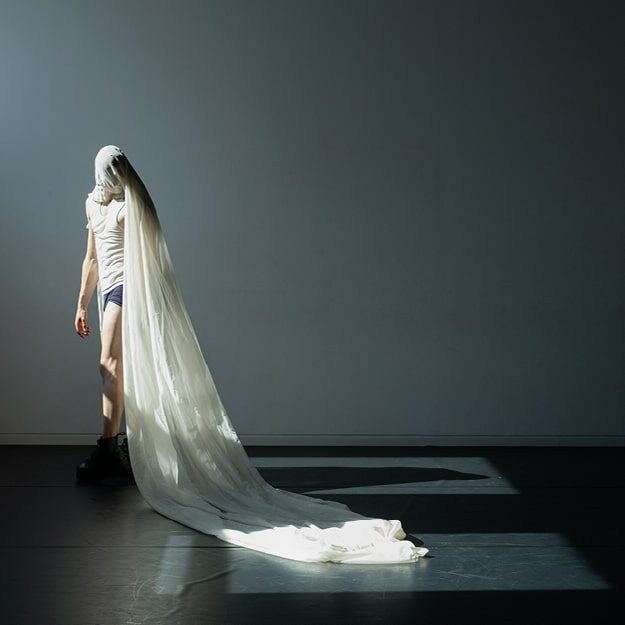

circusnext accueille Juan Carlos Panduro, Oriane Lautel, Farö Céleste et Jakob Jacobsson pour des temps de résidence chez ses partenaires parisiens : l’Espace Périphérique et la 2r2c-rueWATT.
L’accueil en résidence et l’organisation d’étapes de travail font partie du programme de soutien que propose circusnext aux artistes sélectionné·es. Ces temps dédiés permettent aux auteur·ices de travailler autour de leurs créations dans les meilleures conditions possibles et de bénéficier d’échanges précieux lors des sorties de résidence.


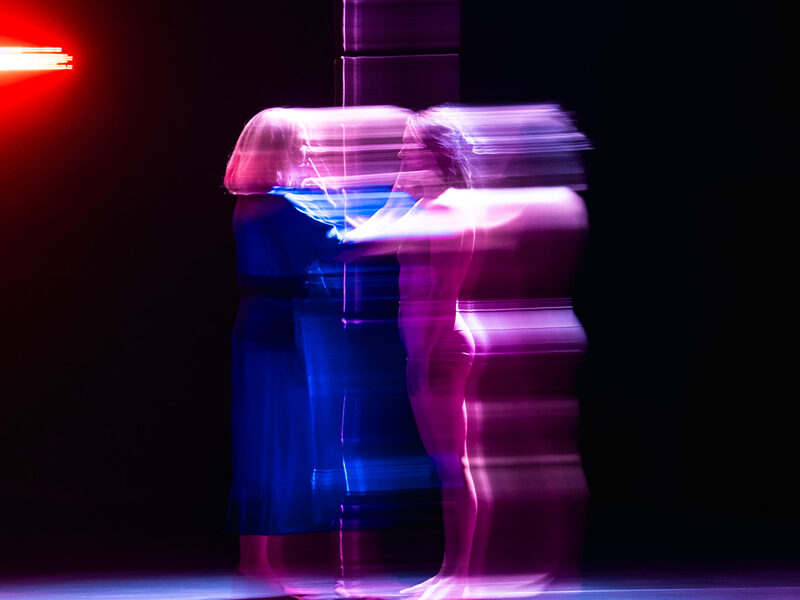
INTERVIEW. Taigi Cirkas, Saucisson – En collaboration avec Around About Circus

Taigi Cirkas and the female ready-made meat product of Saucisson. By Valentina Barone.
In Saucisson by Taigi Cirkas, the company’s vibe brings the audience the absurdity of an imaginary place filled with powerful images and accompanying out of context sounds. Time can stretch while your gaze catches the colourful neon lights in the dark, a magnetic attraction driving you to watch. In a room dominated by primary colours, two bodies land on stage wrapped in big plastic bags from the ceiling, like two meat products in a mysterious butcher’s at night. A blue dress shines, on a woman staring at you sitting on a chair, while in the background, another is agitating a rope, with the sounds of a barbecue frying all around them. There is nothing to understand, just acceptance that disgust and attraction can coexist. For this interview of the circusnext series, we meet Elena Kosovec and Izabelė Kuzelytė, two women who play with illusional objectification and circus.
Valentina Barone: How long ago did you start collaborating and when did you decide to call the company Taigi Cirkas?
Izabelė Kuzelytė: I met Konstantin Kosovec – Elena’s husband and the co-founder of the company in the only aerial space in Vilnius. Later, he invited me to join him and Elena in a theatre space to start training together, and the friendship between the three of us just kicked off from there.
Elena Kosovec: In 2015, I dropped out of medical school after five years, deciding that it was just not for me, and I had a gap year. I was feeling quite lost at that time, but in the end, I just happened to meet Konstantin and Izabelė. It felt like we had known each other forever. We skipped the small talk and immediately went to the weirdest conversations, and that’s why it worked so well. We were completely self-taught, and reckless, training in a gym without adequate equipment or the right mats, but with a huge desire to learn. Izabelė had a couple of years of experience and began to teach me the cool stuff. Together, we binge-watched circus performances and made big dreams.
Formally, Taigi Cirkas is a company founded in 2016. It was when I directed Konstantin in a short sketch involving him and a music composer for a small festival in Vilnius that we decided to collaborate. As naming a company is always difficult, we went for “Taigi Cirkas”, which in Lithuanian means “simply circus”.
VB: Saucisson takes a far from classical approach, and its absurdity reverses the spectacularity of circus. How did you come by this intention in your creative process?
Izabelė Kuzelytė: From the beginning of our friendship to 2025, many things have happened. We took part in different experiences, but we always came back together. Nowadays, Taigi Cirkas includes different members for each show. Saucisson is a unique experience. It did not start with the intention of becoming a project; we did not have in mind to go for residencies to create a production. One day, thinking together, we had the intuition of doing something out of the ordinary. The concept originated from the absurdity of dedicating years of training suspended on a cotton sausage, and it stayed with us. I would say we had the words shocking, absurd and disgusting in mind.
Elena Kosovec: There was already a lot of grossness involved, driven by the desire to mock our disciplines. I felt fed up personally with the serious approach to a prop and the gentle approach to the rope like it is your loved one. I just felt like I wanted to do something that was the opposite, and talking with Izabele, we caught up this wave. We started getting involved and thinking about it together. It has been a fast escalation of ideas. We thought let’s do this, then do that, then let’s hang a sausage and let’s put mayo on it… We removed the mayo part after. (She laughs).
VB: How did you decide to apply to circusnext with this audacious proposal?
Elena Kosovec: What is worth mentioning is that in this project, we allowed ourselves to involve all of our creative facets without limiting ourselves to just being circus artists. We rented a camera and just decided to see what would happen. We used a text we created together and the video editing skills we wanted to have. We allowed ourselves to try different things without limiting our creative medium to aerial. It worked because of the freedom we felt experimenting without planning to go anywhere. We just went with it, and then, seeing the first video, we were like: hey, it is pretty cool and might fit for the circusnext selection.
We wanted to be unapologetic and put ourselves out there. It was clear there was an impalpable sense of sensuality and femininity involved. We continued to follow the immediate creativity, picking up and implementing the imaginary ideas spontaneously appearing in our heads. That’s how we created these absurd kebab sign language elements associated with sounds, giving the spectators a sense of displacement.
Izabelė Kuzelytė: We filmed the first video in February 2023, a very abstract montage cut full of random ideas. With applying to the circusnext selection, we faced our first challenge as we had to make a new video to send that was 10 or 15 minutes of uncut footage, which helped us to understand that the project was doable. I think there were some things we managed to say without putting them into words. The main one, probably, was desacralising the circus body and the object.
VB: What have been the effects of participating in the circusnext laboratories during your creation process?
Elena Kosovec: Before the laboratories, it was just the two of us seeing our universe and only from the inside. After showing the work in progress to the laboratories’ colleagues, we invited others and opened the view to the outside. Receiving feedback worked as a reality check. We knew what we were interested in searching for, but we opened up to the opportunity for people to exchange what they saw in what we were doing.
Izabelė Kuzelytė: When we discussed the video, people told us to see different things in what we were doing. The circusnext labs helped us find our direction by clarifying the intentions that we were not interested in following. There were a lot of discussions to narrow down what we really don’t want to say, what we want to say and what is Ok if people see it or not.
Elena Kosovec: We were surprised by the feedback since we did not even imagine the work speaking on the topics they mentioned. It has been nourishing and interesting opening up to this exchange opportunity and inviting people to say what they saw and felt. One of my favourite comments was that we were worshipping the phallic cult. Someone noticed that our onstage relationship was rude, while we were always very gentle with the sausage. I was surprised since we thought we were doing the opposite by destroying it.
VB: What is the relationship between the two females on stage and the apparatus that you want to underline?
Izabelė Kuzelytė: In the video introducing the show, there was a joke about two women interacting with sausages to demolish the patriarchy. It was just a scribble out of nowhere, but I liked it later. I don’t think this will be the show’s primary theme. We more or less had the idea of talking about a human ready-made product, broader than female objectification. We do not know yet exactly where we will go from now.
Elena Kosovec: When you create something following an irrational stream of ideas, it is not easy to go only one way. There are just different streams following each other. As authors, Izabele and I have been close friends for a long time and shared experiences like posing nude together for painters. We know how to spend time in intimacy with our bodies. We are close mentally and physically but without the sexual or romantic undertone. This quality allows us to trust each other and be very weird on stage. I know, we are a little bit delusional in that sense! (She laughs). Our writing comes from a great body and mind freedom, and this relational quality creates an illusion around us that we can play with.
Izabelė Kuzelytė: Speaking about formats, Saucisson originally was thought to be an installation, so it has already changed a lot. The piece contains material we generated years ago from random creative impulses and, at the same time, is a recent portrait of who we are as authors. We asked ourselves what to challenge: if we wanted to talk about sexuality and women on stage and how. I have been interested in the female portrayal of aerial acts and the consequent sexualisation of the woman hanging in the air. Our focus on desacralising the circus body came from the perspective of being a woman doing the splits on silks during a private event.
Elena Kosovec: Yes, when you are in front of an audience eating roast beef and you get this weird feeling because everyone is having a nice banquet, while you are there just doing the splits, and then, you think: why am I spreading my legs in front of people eating? It is so normalised in the circus world, and we are Ok with this, but then, while writing Saucisson, this aspect acted as a creative impulse in reverse. What else can we do with the same elements? Can we show I am uncomfortable? Then maybe let’s play even more uncomfortably.
There is also a reference to the market and the consumer-product relationship underlined by the meat presence, as you can consume circus as entertainment. It is liberating to de-spectacularise circus and play with attitudes and images from other arts. The blue dress, for example, is a reference from David Lynch and fits tremendously on stage as a shining colour. Anyway, all the elements in progress we find intuitively need to pass a vibe check.
VB: What point are you at in the process of creating the show?
Elena Kosovec: We are planning some residencies in the spring and will have the première in the Autumn of 2025, or even a little earlier. The circusnext final presentation is a delicate moment since you have to finalise 15 minutes of a show, but later, you have to rework the material for a longer format. We are discussing and deciding which part to expand or where to add extra elements. What is necessary now is preserving the freedom to experiment and not feel stuck in a format. For this show, overthinking would mean getting out of the frame of our creative flow, so we want to end it relatively quickly but respect how we made things happen.
We asked Roberto Magro as an external consultant to help us navigate the creative process and understand, for example, if we required an external eye or not, which, in our case, we understood was not needed. He supported us in being ourselves no matter what, and Saucisson’s process without killing our inner voices, advising us on how we can do rather than telling us what to do. Konstantin is the technician and creator of the frying sausages’ props. We are collaborating with two different composers, an opera singer Egle Radaviciute, who got the vibe of what we are doing, and we found the lighting designer, so the team is complete now.
VB: As one of the few Lithuanian contemporary circus companies, how does it feel to be a circusnext laureate?
Elena Kosovec: In a light-hearted way, you know you’re always more famous and successful outside your own yard. It is a little weird when you come back from Paris and feel like you’re back to the same old thing but internally, the process has changed you. Now we are comfortable and know we are on the quality level of international circus productions. It has changed our way of communicating with ourselves, not necessarily because we are recognised artists in Lithuania.
Izabelė Kuzelytė: I would say that the circusnext laureate status can remove a little of the self-doubt. Lithuania is very small, as is the whole Baltic Region. There is also an interesting joke that says Estonia has a youth school, Latvia has a circus place, and Lithuania has people, so we generally cooperate and support the sector growth in the Region.
Elena Kosovec: Yes, it is true. We form a good circus unit, all three of us!
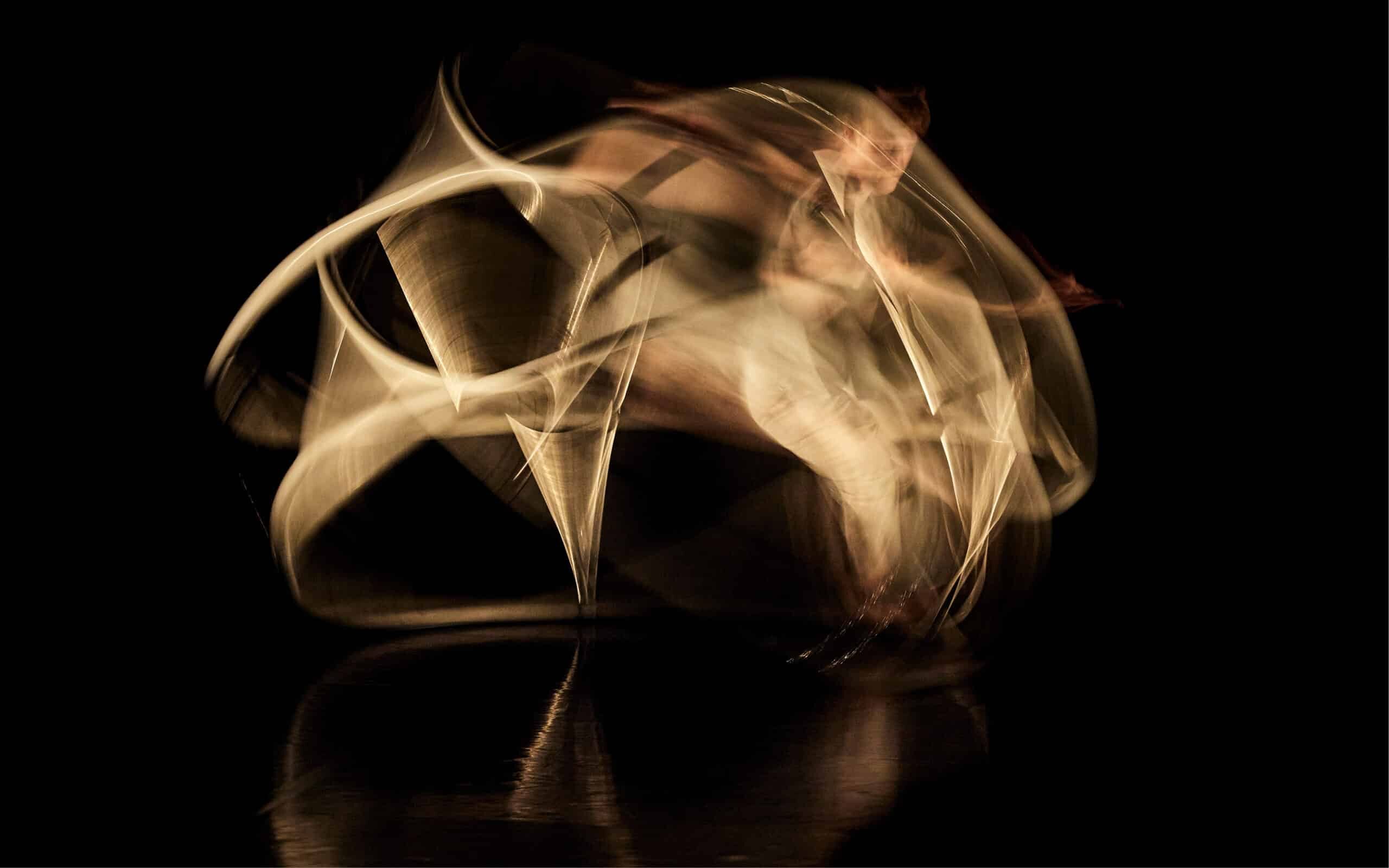
INTERVIEW. Noa Aubry – Là où la nuit n’est pas si loin puisque le jour s’en va déjà – En collaboration avec Around About Circus

The poetic spatial dimension of Noa Aubry. By Valentina Barone.
Noa Aubry is a French circus author interested in pushing forward the technique of the German wheel. Studying circus since she was an adolescent and then at a professional level at CNAC, she ended the trajectory of the circusnext process presenting a powerful and delicate solo with a long provocative French title, Là où la nuit n’est pas si loin puisque le jour s’en va deja. Noa’s personality finds her expression in the constantly shifting limits, where space and time coordinates meet each other and balance a dance of interlinked contrasts. Her technique of listening to the apparatus as it reacts to her movements redefines the mastery of controlling the object. In her solo, the German wheel becomes a space of being, a 360 bubble in motion responsive to weight control. For this article in the circusnext interviews series, we move at the intersection of reflective thoughts and embodied practices, looking at how she is shaping a personal artistic way of using an uncommon circus apparatus from gymnastics.
Valentina Barone: When I think of the German wheel, in terms of versatility, I feel hesitant. How did you get passionate about this specific equipment, and why?
Noa Aubry: I started studying circus when I was fifteen at ENACR. I took multidisciplinary classes, but then my teacher introduced me to the German wheel, and I immediately liked it. At school, I rarely saw any representation of it and was unaware of its potential. As everyone does nowadays to learn the technique, I spent a lot of time watching videos of acts or gymnastic competitions and all the possible materials I could find.
Intuitively, I thought, there might be a space of freedom for me to learn in my way and at my own pace. I have a background as a musician since I played classical guitar for a long time, which gave me a musical approach to circus and developed a very precious relationship with rhythm.
While doing the German wheel, no matter what I was learning, it became evident that the rhythm was always the same. There was always a systemic momentum following the same pattern: an acceleration, a figure at the top in suspension, an acceleration, a deceleration, and, again, a suspension. I wondered if, instead of learning a new figure and focusing on what to do inside, we could look further at the wheel movements and open up other possibilities. I began to explore that aspect and went back to the basics where I could have control and master the wheel’s weight.
Later on, I continued exploring the German wheel at CNAC. Since my research relies on weight shifts, I focused on slowness, not directly, but as a consequence. My research is entirely about paying attention to the details of how the weight moves. How can I hold onto it, have the time to absorb the wheel movement, and not just think about when to insert a figure at the right moment? I had to stop thinking of circus figures in favour of listening to how to move this wheel and to receive the wheel movements. I like geometry, and this apparatus evokes it, creating curves and connections between lines and spirals. In my approach, it is my body that moves the wheel, not doing feats, just as a body that can exist within that object.
For me, the question is: what does my body feel? We are alive, feel something, and are unique in our feelings. How do I touch the wheel, and how does my body position itself? In circus, we learn figures, so it’s very likely we end up doing similar things. This research is a way to say that I can be different and maintain my individuality in this discipline. The more we feel, the more we notice details, and the more time seems to stretch. When there is slowness, I can feel the entire journey of the sensation through my body, it slows down. It intensifies.
VB: Your work merges the dimensions of space and time. Is the German wheel a space for you rather than an apparatus?
NA: Yes, it is more about a space than an object. I also work on presenting the body in a way that doesn’t immediately change when outside of the wheel or without it. The show does not aim to symbolise something in the wheel or something outside of it. It is more like a journey, a sensitive exploration. The German wheel exists on its own. I can exist inside of it and move on it. The weight of the German wheel is almost similar to mine, around 40 kilograms. And yet, I wanted it to feel light, to make it appear light. I wanted to express a sense of softness through a sensitive approach to this apparatus.
When the audience enters I am already on stage but not yet inside the wheel. We spent a lot of time thinking about how we could emphasize the body and not just the body-with-the-wheel. For this reason, setting up the space on stage and inside the wheel are both delicate moments. I enter the scene and only go inside the wheel after many minutes. The wheel’s space offers possibilities of rhythm and suspension, conditioning my body in specific ways at certain moments. If I resist the wheel, movements can be very slow, but there might be faster moments. I always work on alternation, seeing how my body is with and without the wheel. But the importance for me is that the body keeps traces of these spaces inside and outside the wheel so that there is always a continuity of the body.
The wheel is a space that carries my body, as the ground carries the wheel, but the wheel is all around me, so there’s a dimension where I’m both suspended and grounded. The wheel can be still, and I can move inside it, or I can be still, and the wheel can move. All these exchanges are very diverse.
VB: At what point in your career did you apply for circusnext?
NA: I was just out of CNAC and wanted to create a show as my research’s continuation. It took some time before it grew into a form that could become a whole show. Applying for circusnext was not necessarily in my thoughts, but people recommended doing it and I applied with the material I had researched in school. I enjoy reflecting on creation. I can spend a lot of time writing and reading to try to understand. The philosophical and intellectual dimensions interest me and nourish my work as something I need. The first lab during circusnext was great because it was just before my first residency. It was nourishing to be with others at the beginning of the process and exchange ideas, to see people who understand what you want to do. Circusnext was great for setting milestones, and artistically it gave me reference points that enriched the process. It also helped me find a team, someone for sound and lights. Often, these things work last minute, but it changes everything when there are suddenly lights and sounds, and in my case, I am happy to have done some of that work in advance. I reminded myself I wanted to explore more after the process ended. The show is not finished yet. It is still a sensitive work on transformation.
VB: Can you tell me more about your choice of an intriguing title as Là où la nuit n’est pas si loin puisque le jour s’en va deja?
NA: I chose the title quite quickly; it came up almost as an intuition. There’s a poetic approach in the title that I wanted to evoke. I sometimes like to provoke, in the fact that it’s a bit long. I love that moment of transition between day and night. The basic idea was to let it express a place where something is happening, an in-between space, a place of passage. What’s relevant for me is just the transition. At what point do we draw boundaries? When do we decide that it’s night, and what happens in between? This research is much about that. Our entire life is compartmentalised. All words describe specific things, and there are boxes, borders, and edges for everything. But in reality, things are never as defined as that. As humans, we often decide to define, although everything is transforming, and we always carry the past we’ve lived through and the projection of the future. There’s always a permanent temporal multiplicity. I wonder how to make these in-between spaces sensitive.
VB: Who is behind the scenes with you and helps you professionally during creation?
NA: I worked alone a lot at school, but since I started the show, I’ve understood how enriching it is to work with other people. I work with Naïf Production, a company based in Avignon. I met Mathieu Desseigne-Ravel, one of the founders, during my time at CNAC. He had already supported me during Les Échappées, the presentation of solo research I did at the end of the three years of training. There was already a powerful artistic and human connection, so I asked him if his company could support the project and provide feedback and human exchange throughout the creation process. Other people support me, coming in occasionally to help me understand the research. It is important for me to discuss and compare my ideas with other people, it enriches the creation a lot, especially for a solo.
VB: How did you arrive at the choice of implementing the pulsing mixture of electroacoustic sound composition?
NA: I composed the first musical ideas myself. At that time, I needed to use music to express what I felt, but then I realised that I already had enough to do on stage and could let go. Now, I work with Christophe Ruetsch, a performer and composer who works with all kinds of sounds, which he casually mixes on stage or in electroacoustic music studios. He brings me new intuitions, possibilities that I did not necessarily imagine. It has been a very enriching encounter that makes the process grow.
VB: What are your influences or inspirations from the arts that you bring into your circus research?
NA: I love going for walks and looking at landscapes. Sometimes, I take time to observe something like a river with a current. The river moves, and just behind it, there are trees. If there’s wind, the leaves will move, but the tree trunk doesn’t. In the same landscape, we have these different rhythms coexisting and also, the weight of the elements that surrender to the wind, or not. These are not things I think about all the time, but they nourish me. Another influence is reading. Philosophy, some novels…There’s a philosophical essay by Barbara Stiegler, Nietzsche et la vie, which I find incredible. It’s an essay about the sensitive body, how the body receives from the outside, and what it does biologically with that external input to continue existing. I return to what I said earlier about how we name things to put boundaries around them. We only receive flow. There’s never something fixed.
Virginia Woolf’s novel The Waves also resonated with all of this. Otherwise, I found inspiration in a lot of dance performances. For example, I enjoy Nacera Belaza, Christos Papadopoulos, or Gisèle Vienne. I’ve always loved watching dance because unlike what we often see in circus (except for a few exceptions) there is work on continuity in dance, a precise exploration of the body. We explore that. Christos Papadopoulos, in particular, works on this as well: he creates shows focusing on one thing and how it transforms. He embraces this sensitive, simple, yet complex approach. He doesn’t try to symbolise, understand, or tell a narrative. That speaks to me a lot: working from a singular sensation each time.
VB: How would you define your relationship with circus and dance?
NA: I love this question, but it would take me hours to answer! Both disciplines are strong in themselves. It’s hard to say that we do one thing when we ‘come from’ another. I like to say that I move. That I move from one point to another, that I learn to feel and let my body express itself. I keep nourishing myself with dance classes and workshops. Recently, I took one with Myriam Gourfink on slowness and density.
Since the beginning of the creation, and even before, there’s been an emphasis on the quality of touch. The feet, for example, how the feet land on the wheel, how they land on the ground. Working on twists, which are more dance-related work, understanding what the body can explore internally. What’s always complicated is asking myself: should I keep saying it’s circus? And that circus can also be this? Or should I say it is circus and dance? For me, these are infinite and very rich questions. Do we expand the category or say they are two different categories?
VB: What are your plans for 2025 and the trajectory for shaping the final version of the show?
NA: I will be soon in Denmark for a residency at Dynamo Workspace, then in Germany at Tollhaus and then in France again for another one in 104 in Paris. The debut of the show will be at Le Sirque, on the 12th and 13th of August 2025.
Besides my authorial project, I also collaborate as an interpreter – alternate with Marica Marinoni – in the new creation of Les Filles du renard pâle, La Roue Giratoire. I think about my show every day. There’s so much to do and think about, so it takes up all my time. It’s nice to have something else that’s different, and this experience is teaching me professionally a lot. It also offers some stability. If I didn’t have other projects on the side, everything would rest on the solo, and I think that would be harder.
None found
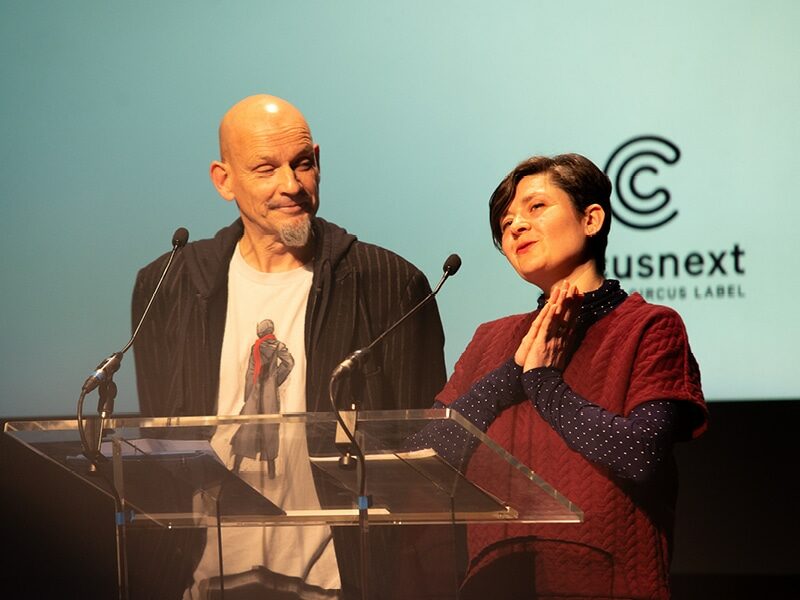
REPLAY. Repertoire et renouvellement des écritures dans le cirque contemporain, une journée de conférence croisée par circusnext et la Maison des Jonglages.
PANEL 1 – DIGITAL SOUL PROTOCOL
Plongée dans le code source d’une œuvre de cirque et se confronter à la notion de répertoire : retours d’expérience avec Erik Bordeleau, Mathieu Antajan, Maroussia Diaz Verbeke, Antonia Kuzmanić
PANEL 1 – THINK CIRCUS! #4
De la construction de l’identité artistique de l’auteur·trice au renouvellement des écritures avec Antonia Kuzmanić, Delphine Lanson, Claudio Stellato
PANEL 2 – DIGITAL SOUL PROTOCOL
Préparer la reformulation d’une œuvre de cirque : De l’accord moral à la boite à outil une aventure généreuse et sensible ? avec Edouard Peurichard, Dries Vanwalle, Mathieu Despoisse