Révélations circusnext 2026



4 compagnies Lauréates, sélectionnées parmi 10 Finalistes, présenteront chaque soir un fragment de leur spectacle en cours de création. Avis aux amateur·ices de cirque contemporain et aux curieux·ses, venez découvrir ces figures émergentes du cirque contemporain !
En partenariat avec
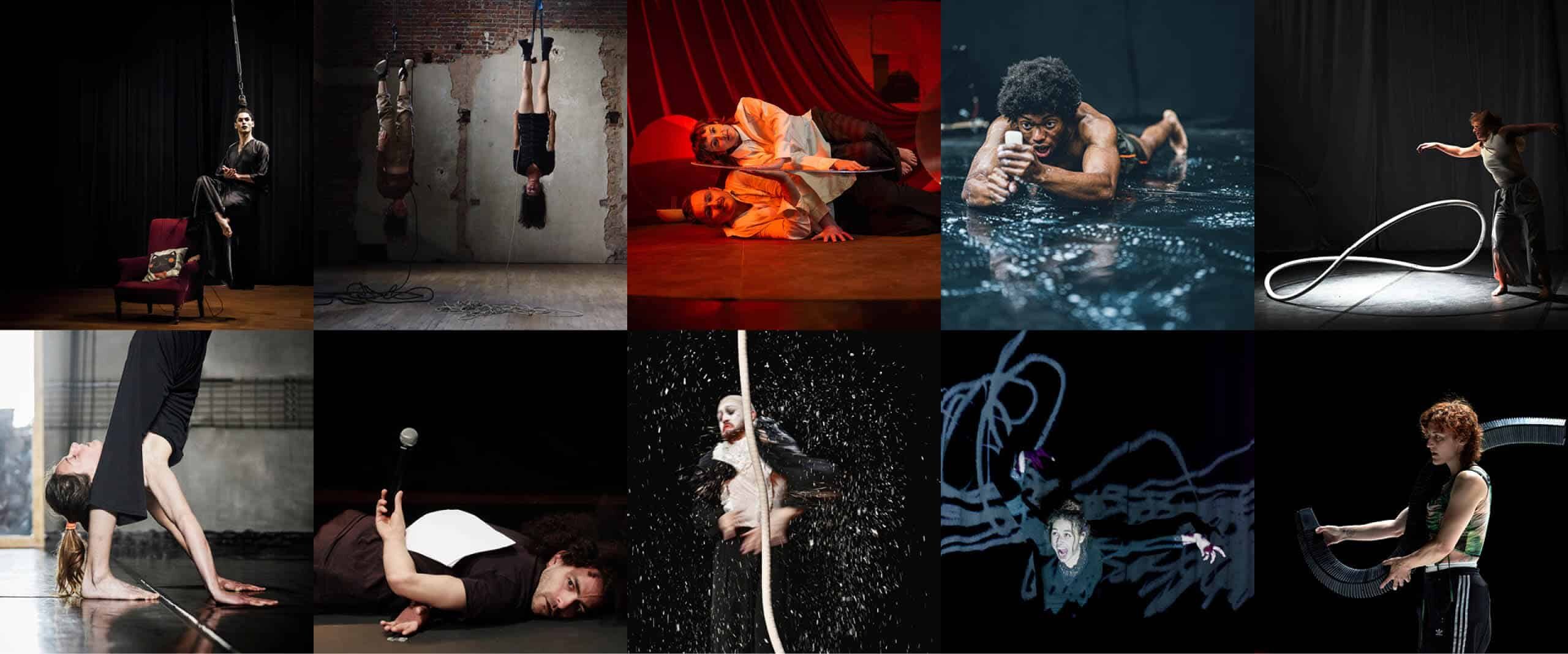

Présentations des maquettes au plateau de 20 minutes des 10 projets Finalistes
Discussions bords-plateau
Rencontres avec les artistes et networking européen
Inscription en ligne ouverte jusqu’au 26 août
Une question ? reservation@circusnext.eu
Événement réservé aux professionel·les – sur invitation


Valeria Zavattoni (IT) · ITALIE
Who killed the cat? · Équilibre · Solo
Filip Zahradnický (CZ) · RÉPUBLIQUE TCHÈQUE
Nothing to see here · Jonglage · Solo
Collectif Tombé du Nid · Federica Peirone (IT) · FRANCE
Tu Be or Not To Be · Équilibre, antipodisme, musique live · Duo
Circo Kampung · Alvin Yong (MY) · PORTUGAL
Ikat Tepi · Diabolo · Solo or duo
Alice Langlois (FR) · FRANCE
ORLANDO · Trapèze fixe · Solo
Tri groša · Danka Sekulovic (RS), Ana Pinter (RS) · SERBIE
It’s OK to hypnotize a chicken, but rabbit gets traumatized · Antipodisme, multimedia · Solo
Collectif La Barque Acide · Steph Mouat (AU) · FRANCE
EX5 · Acrobaties au sol, équilibre, audiovisuel, musique éléctronique · Trio
Rikard Holmstedt (SE) · SUÈDE
Temporary Sculptures · Jonglage, sculpture, travail du bois · Solo
Maria de la Parra Guerra (ES) · ESPAGNE
Suspendida · Corde, mouvement · Solo
Riccardo Pedri (IT) · FRANCE
HEAVYMETAL · Acrobaties au sol, suspension, nouveaux outils, danse · Solo
Soutiens à venir
Les Finalistes bénéficieront du soutien de circusnext et des lieux partenaires européens via :
Prochaine étape
La Sélection des Lauréats · Septembre 2027
Les Finalistes présenteront une étape de travail au plateau devant un public de professionnel·les invité·es et le jury qui désignera les 4 projets Lauréats circusnext 2027.


Cie Inéluctable’s SEUIL: materialising the connection between the inert and the living
Around About Circus · By Valentina Barone
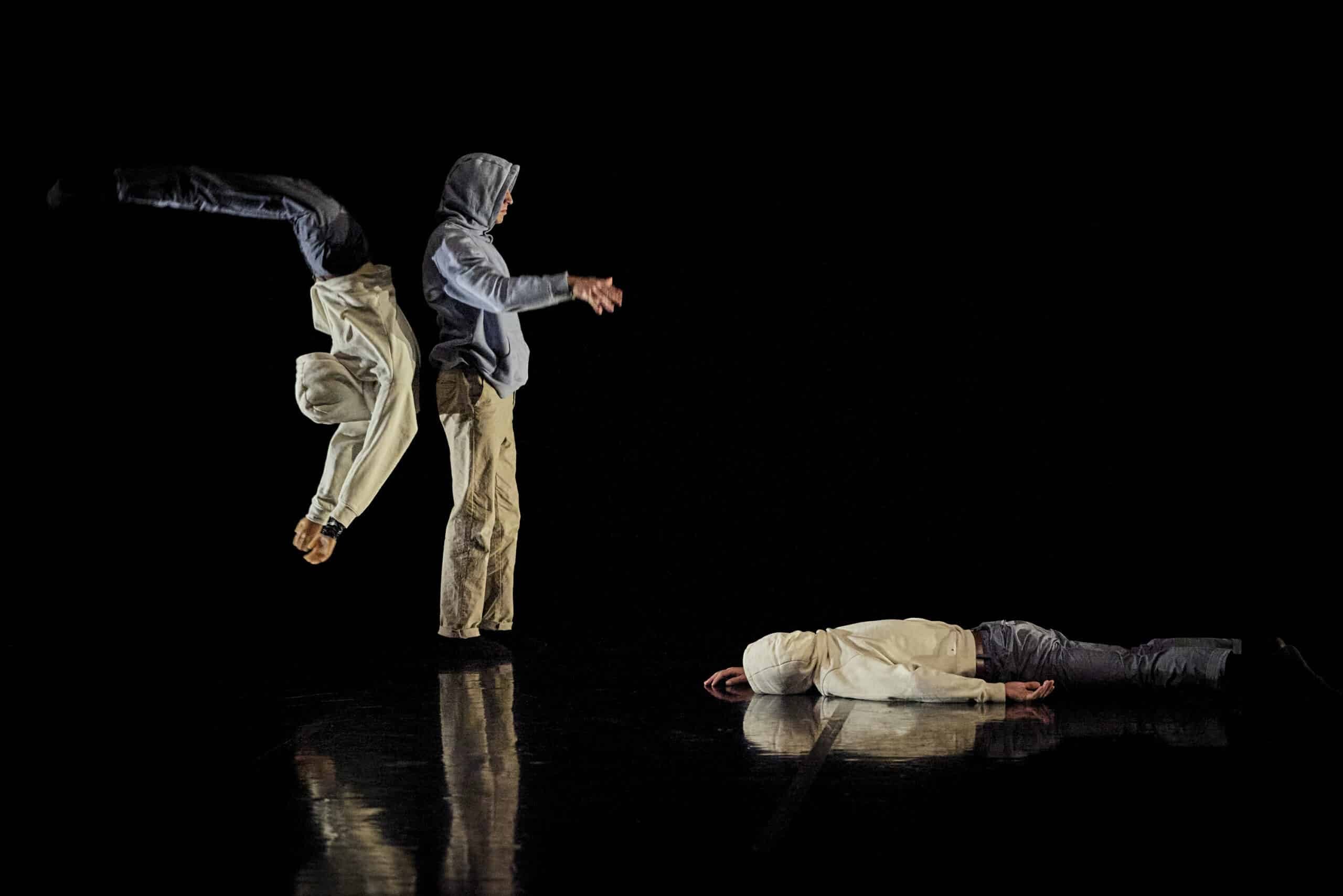
Marius Fouilland and Aimé Rauzier are two acrobats who blend dance, circus, and marionette. In their first co-authorial circus creation, a duo becomes a quartet with two inanimated bodies that seem to double their presence. Trained since childhood in dance (Marius) and circus (Aimé), they met at Académie Fratellini in different promotion years. At school, opportunities to share movement practices increased, until grieving the loss of close circus artist friends touched both and catalysed their attention to it as a shared theme. Marius founded his own company and then invited Aimé to join an acrobatic journey around a puppet with proportions equal to their own, embarking on research into an inert body that plays with their movements in between. With the title Ceux qui restent, the company Inéluctable project became a laureate of circusnext 2025. On stage, the absence of a living body takes the shape of a puppet to be carried, moved, and manipulated. The acrobat’s floor technique is at the service of maintaining an illusion, while the marionette is so similar to a real body that the illusion seems real. The spectator gazes fondly, realising only sporadically who is alive and who is not, feeling the melancholic weight of absent presences that interweave in slow sweetness, or explosive jumps and falls on a reflective surface that amplify the visual game of fiction. For this circusnext interview series, I’ve reached out to the two authors in residency in France to chat about this metaphorical work. Their creation, now entitled SEUIL, will debut in October 2026.
You’ve known each other since your time at the Académie Fratellini, even though you were in different years. How did your collaboration begin?
Marius Fouilland: At school, it happened that we took a few dance classes together. In 2021, my final year, we also presented a carte blanche together – a free-form presentation in which you can create whatever you like. Even back then, I wanted to set up my own company, and the following year, the company Inéluctable was born.
Aimé Rauzier: I’m a year older than Marius, even though he finished school a year before me. I finished school in 2022 and immediately started working as a performer in a variety of very different theatre and circus projects – I would say they are rather hard to pin down into any specific artistic category.
What do circus and dance as disciplines mean to you, and what interests you as creators?
Marius Fouilland: I started training in dance and circus around eight years old, and I have always alternated between the two, often wondering which one I should choose. Now I like to use the term acrodance to describe my practice as a dancer and acrobat. Dance allows me to codify a range of emotions and information that the exceptional nature of acrobatics alone would not be able to express. And yet, if I did not combine dance with acrobatics, I would feel that something was missing. What I love about acrobatics is its explosive energy, combined with the chance to explore gentler movements at a slower tempo. That’s why I’m interested in working on falls and puppet movements. Our project explores a very wide range of movement qualities.
Aimé Rauzier: Before joining the Académie Fratellini, since I was a child, I practised various circus disciplines, so I describe myself as a circus artist. What circus has given me is a physical engagement that I really value, a need for individual expression combined with a spirit of collective adventure. A love of sport, of taking risks, and of expressing emotions through the body. As the sense of discovery, and what my attempt to express myself brings out in another person. All of this is why I got into circus.
Marius Fouillard: I like being responsible for a project, but I also enjoy writing it together with others and discussing different ideas. SEUIL is Inéluctable company’s third artistic creation, the first designed for the theatre, and Aimé and I are its co-authors. As a performer, I am more at the service of others’ ideas; as an author, however, I am interested in talking about something that concerns me, that I have experienced first-hand, and that touches me deeply. In this case, it is about the relationship with death and with those who are no longer with us.

Where did the idea of working with a puppet that looks just like you come from?
Aimé Rauzier: The idea came from Marius and his curiosity about the subject: exploring the loss of a dear friend. The loss of two friends who were circus performers brought us closer together because it was an experience that affected us both. We asked ourselves how we could reflect, both spiritually and practically, on the dimension of the other who no longer exists, on the relationship with those who are no longer alive but are perceived as present. Working on death is unique: it is a dimension that is both distant and close, involving personal, sociological and physical relationships.
In a book that inspired us, Our Grateful Dead: Stories of Those Left Behind, the author Vinciane Despret writes that the dead want to be remembered. The basic idea was there, but one element was still missing: how do we bring to the stage the body of someone perceived as present but no longer alive?
So we started contacting companies that were already working with puppets and, in an initial workshop in March 2024, we tested our research. At that point, we were still uncertain, entering uncharted territory. We showed the material to Aurélien Bory, who pushed us to continue the research, recognising its potential, its symbolic power and the possibility of developing a previously unexplored form of acrodance.
Marius Fouilland: Our first marionette was around twenty kilos. Obviously, the idea is to move it as if it were alive, but because of its weight, every movement felt heavy during our early improvisations. That’s why Aurélien helped us find experts to build the kind of marionette we needed: a circus marionette, capable of performing acrobatics and moving with that kind of fluidity.
We began meeting various companies and puppeteers and got involved in a process that initially seemed risky, expensive and entirely artisanal. Our marionette had to have specific characteristics; it had to be able to be manipulated like a real body and used for falling onto without causing injury. In the end, by bringing together a range of skills, including the expertise of Élise Vigneron from Théâtre de l’Entrouvert and the builder Arnaud Louski-Pane. Thanks to them, we met Alma Roccela and Ninon Larroque, who made the puppets we use in our work.
What are the technical specifications of the puppets you use on stage?
Aimé Rauzier: For the circusnext performance, we used three puppets: two lighter ones made of aluminium, weighing about four kilos, and one heavier one. All have movable joints that allow for articulated movements. The head is made of wood. It fits into the torso and is connected to the neck by two elastic bands, allowing it to bend forwards, backwards and sideways, naturally simulating human movements.
Marius Fouilland: The first scene we presented uses the heavier puppet. The body that falls and is perceived as heavy is subsequently replaced by the lighter puppet, and this creates a sense of disorientation in the audience because they are still expecting a reaction from the previous puppet. Our research into marionettes is still ongoing, and we are experimenting with different weights and movement possibilities. In the future, we do not rule out building other, special marionettes to reproduce specific movements and effects.

How did your participation in circusnext influence the creative process?
Marius Fouilland: Usually, finalists are asked to present an excerpt from existing material, whereas in our case, the process led us to create the 20 minutes we hadn’t yet developed.
Aimé Rauzier: The development of SEUIL is taking two years. In total, we calculated that the show’s development involved 18 residencies. circusnext accelerated the artistic research process, transforming it into a genuine creative journey.
As for the laboratory, we were at the very beginning of the creative process and attended it as individual participants. Working at Dynamo Workspace in Odense, Denmark, with Delphine Lanson was stimulating for me, as was engaging with people from other countries, where the development of circus has a different political significance. It was also useful for raising awareness of the message our show aims to transmit.
Marius Fouilland: My laboratory experience in Serbia, at Cirko Balkana in Zagreb with Zed Zanzu, was also very positive. The puppets did not exist yet, and meeting other authors, creative processes, and realising that everyone has different needs was useful. It enabled us to meet international partners with whom we are set to collaborate, such as those from the Balkans, Italy, Portugal and Lithuania.
Among the artist residencies, Perplx in Belgium represented a very important milestone for us. The team provided us with feedback, invited us to present the project as part of their annual showcase and proposed that we return with the finished piece in 2027.
There are two of you onstage, but who are your collaborators behind the scenes?
Aimé Rauzier: Marius got in touch with Aurélien Bory at the start of the creative process. With his company III, he was looking to work with young circus projects, so it was the perfect opportunity to support us as a young company and with the overall dramaturgy. Aurélien helped us by believing in the project’s development from the beginning, introducing us to the right people, and offering residency support and future booking opportunities at the Garonne theatre in Toulouse, which he directs. He is a key figure in the development of our ideas; meeting with him regularly has allowed us to review the dramaturgy, showcase progress and discuss possibilities.
Marius Fouilland: Behind the scenes, we are supported by a large team. Alma Roccella, Ninon Larroque and Manon Clavreul worked on the creation of the marionettes. Zoé Petrignet collaborated with us on choosing the style of clothing and creating the costumes. We wanted to create new magic effects in a very natural way, using lights and the puppet movements, and for this aspect, we consulted Rachel Cazenave, who did the New Magic training course at CNAC.
The overall external eye is of the actor and puppeteer Matthieu Siefridt, while Sylvère Lamotte helped us with the movement choreography. The sound design is by a young artist, Victor Comby, being his first sound creation for a circus show, while the lighting design is by Greg Desforges.
The two puppets are identical to you in every way. The image suggests the need to engage in a broader sense of otherness. What do these two entities represent to you?
Aimé Rauzier: At first, we were drawn to the confusion created by these two silhouettes. With its masculine features, the puppet is sketched and does not project a clearly defined identity onto the audience. In this way, the confusion between the puppet and the acrobat creates a choreographic interplay that lends itself to open interpretation.
Marius Fouilland: The characters’ development is still in progress. We could say that the fundamental relationship stems from the individual bond between each of us and our own puppet. We bring to the stage two relationships with death that unfold in different ways. At first, the puppet is perceived by the audience as alive because we try to bring it to life. Later on, the way we move with it changes, and it is perceived as a manipulated object.
Aimé Rauzier: The acrobatic dance created with the puppet is explosive and dynamic; its performative dimension expands, and working on the technique is stimulating for this reason, too. We have learnt different ways to carry and move it like a body, especially during falls.
Another interesting aspect is the impact of the choreographic material in relation to what we want to convey, understanding how the puppet manages to manipulate us through the technique of acrodance, and how we can surprise the audience through this shift in register.
Marius Fouilland: We still have many important choices to make regarding this aspect: altering small movements affects the puppet’s behaviour, so it is during this period that we make the most crucial decisions!
When is the project’s premiere scheduled?
Marius Fouilland: SEUIL will debut in October 2026 in France, at Agora, the National Circus Centre in Boulazac.

Marcelo Nunes’ Ghetto: swinging across the chasm of class
Around About Circus · By Valentina Barone
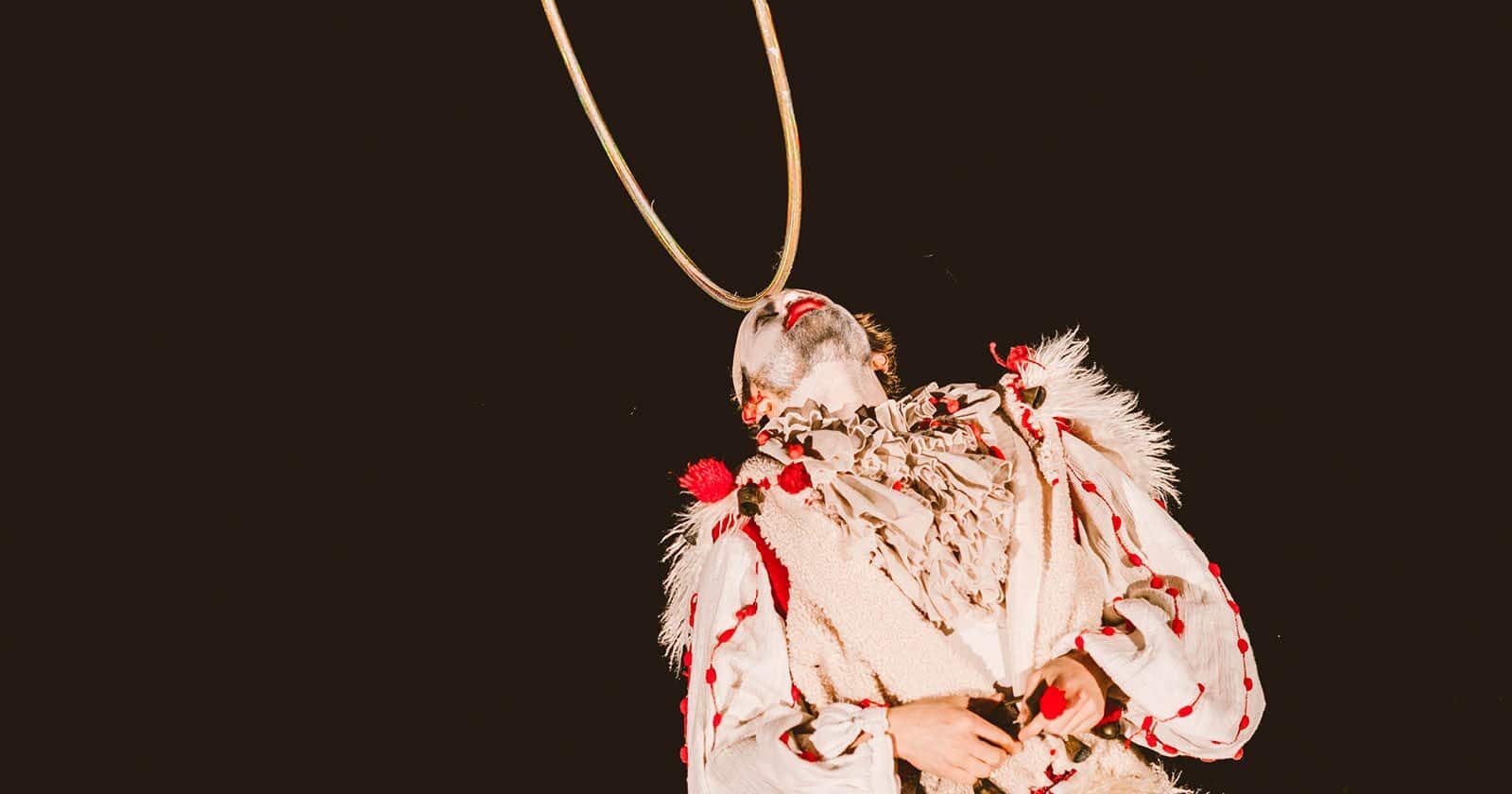
Marcelo Nunes is a Brazilian circus artist who uses clowning, fakirism and trapeze to deliver story-driven performances that explore human nature. He began practising circus arts as a child, attended the Escola Nacional de Circo do Rio de Janeiro, studied trapeze in Argentina and then in Europe at Ésacto’ Lido’ in Toulouse, where he also began practising fakirism. His solo show, GHETTO, stems from a personal artistic need to explore and transform loneliness and social marginalisation into tools for understanding, accepting and liberating one’s own existential condition. The show prompts the audience to question who and what we normally fail to see on the fringes of a society that is unable to empathise with others’ pain or addiction. On stage, the perspective is reversed: it is the marginalised individual and their distress that are the protagonists of a journey that takes us out of our comfort zone. Just as the circus has, over time, reinvented itself and challenged established social codes, Marcelo Nunes’ art speaks out against the homogenising aesthetics of a normative world that prioritises class privilege. Decolonising contemporary circus is possible, and a minority practice such as fakirism becomes an expression of mastery and fulfilment. For the circusnext interview series, I spoke to the artist via video link from Rio de Janeiro.
At what point in your life did you discover circus arts, and how did you become a professional?
Macelo Nunes: From the age of five, through social services supporting vulnerable children in São Paulo, I participated in various cultural activities that I wouldn’t normally have had access to. It was in this context that I discovered circus, around eight years old. I like to think of myself as the second generation of artists in my family, as my first teacher was my great-aunt, my grandfather’s sister. A dancer and model, she was certainly an artist, but found herself in a difficult environment in which to fulfil her potential as such.
I’ve always done juggling and acrobatics too, but clowning was my main discipline until I was eighteen. Then I got a bit fed up with making people laugh and wanted to be seen more, so at the Escola Nacional de Circo in Rio de Janeiro, I specialised in acrobatic base. After finishing my studies in Brazil, I was the coordinator of an organisation that runs activities for vulnerable children. It was a wonderful experience that allowed me to return to my roots in a way that held deep meaning.
And yet, I felt that my desire to be an artist was always there, a voice asking to be heard. Following an injury, I decided to take up the trapeze. I continued my training as a trapeze artist in Argentina and then applied to Ésacto’ Lido’ in Toulouse, where I graduated with my personal project, Pacemaker, from which GHETTO originated.

GHETTO is the artistic expression of your anthropological and social research into the theme of social marginalisation. Where does your focus on the excluded come from?
Macelo Nunes: I come from the ghetto, so this show draws on a social reality I know intimately. This perspective is part of who I am, and when I talk about people living on the margins, I do so from a very personal standpoint because I come from a family with a history of drug abuse and detention.
To society, my mother was of no social significance; her addiction was never seen as a sign of hardship. Yet my mother was unable to receive an education; she had five children and found herself alone, abandoned by a society that failed to help her in a difficult situation.
For me today, speaking four languages is normal, even though I come from a marginalised background. Yet I was only able to talk about my family situation after fifteen years. It was through reflecting on the society in which I lived that I freed myself. To do so, I had to place myself in a position of understanding towards my social condition, integrate myself and learn to talk about it.
Where did the idea for the show come from, and how did GHETTO take shape?
Macelo Nunes: For me, marginality and fragility go hand in hand. It is the sociological aspect of art that interests me: contextualising the individual and exploring why they cannot adapt. It is also for this reason that I eventually began experimenting with the absence of a margin between artist and audience.
In the first year at Ésacto’ Lido, we used to experiment once a month by presenting personal research. At the time, I felt a sense of responsibility for having grown up in a difficult situation. I wanted to stage the experience of being punished by society and its taboos. Fakirism emerged in that context. It arose from the need to explore, as part of a collective process, the theme of exposing shame in front of an audience.
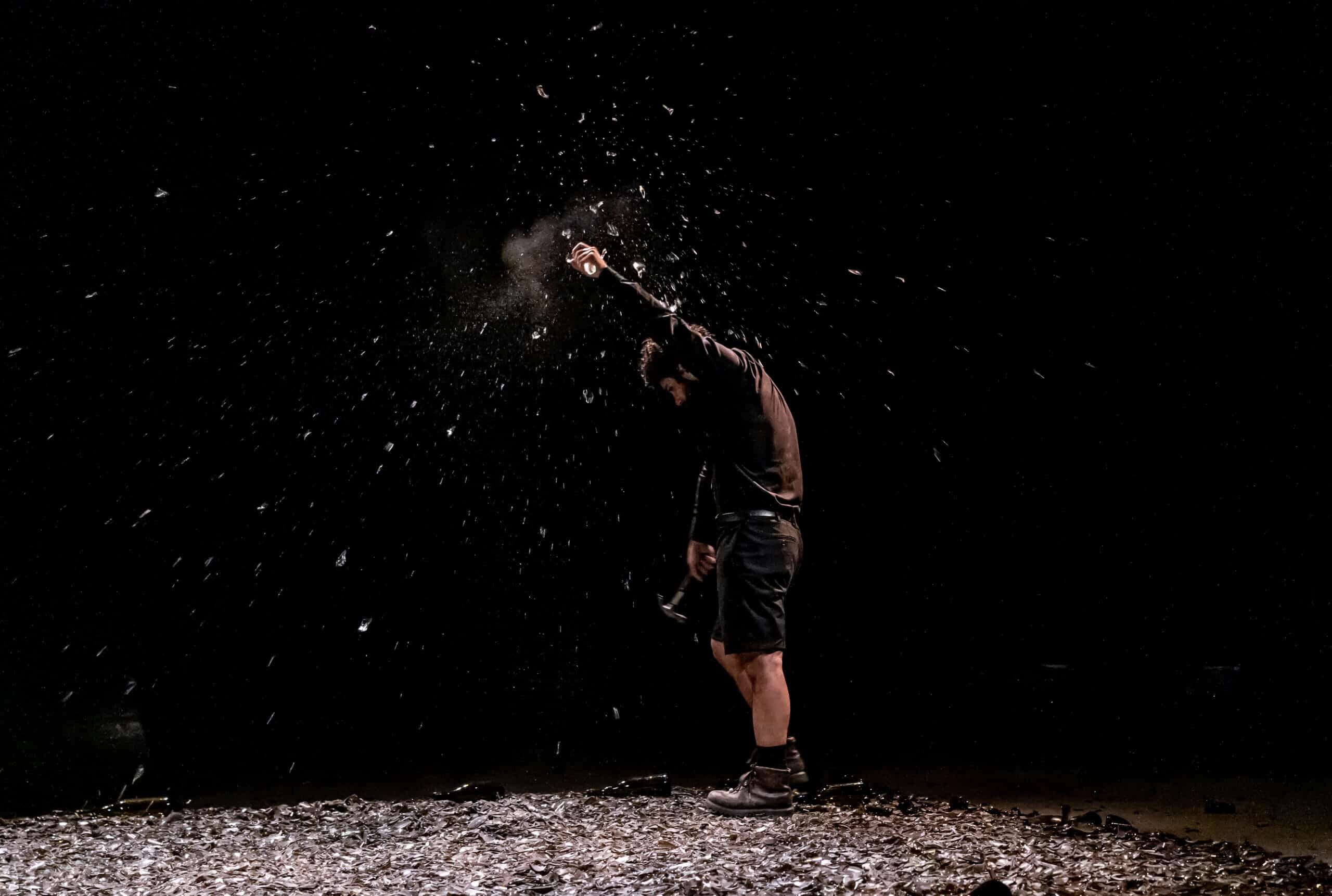
After finishing Le Lido, Silence Festival invited my personal project, Pacemaker, for a residency, and during that time, I developed a short outdoor piece called Hertz. The concept was to start with a provocation to take the audience out of their comfort zone. You see a character who provokes rather than speaks, and in that sense, it’s more a physical, rational piece than GHETTO, more of a performance than a show. In front of the audience, it is my inner clown who takes to the stage, smashes bottles and dances on them. It is a projection of injustice, driven by a desire to engage with society and say: ‘Listen, I’m here’.
After the collective experience with La Barque Acide, I felt the need to focus again on my own artistic approach, with the idea of working on a new solo piece, and I decided to submit the project to circusnext. In GHETTO, rather than the provocation of wanting to be seen, human vulnerability is brought into the spotlight; the clown connects with the audience to feel together. He embodies society’s problem. The jester, on the other hand, tells society that you are the problem. The show features both tendencies: pointing out the margins and empathising with those who live on the fringes.
No longer in an outdoor space, but in the darkness of a stage theatre, in GHETTO, the set design defines the character. Addiction takes shape within the space as an expression of marginalisation. The carpet of glass prompts you to wonder how many bottles there might be on it, how much one would have to drink to create such a vast carpet of shattered glass, and how long this person has been in this state.
The trapeze and fakirism are the two primary techniques that support the character in dialogue with himself. The phrases I repeat are from a poem by Fernando Pessoa, Poema do Menino Jesus, a hymn to the inner child. Its function is not narrative but rather linked to his oscillation between reality and delusion.

The practice of fakirism is painful, but it triggers a catharsis – in both the performer and the audience – centred on the acceptance of pain. What does practising this technique mean to you?
Macelo Nunes: Initially, the technical work was mainly aimed at training the ability to relate to pain and to move with lightness on the broken glass surface. I don’t feel pain on stage, even though the audience senses the danger I’m facing. There is an irrational, instinctive reaction to broken glass because you know it is dangerous.
What strikes me – and what I sense in the audience – is the contradictory revulsion and attraction when watching a fakir, the inability to avert the gaze, but also the ability to normalise what is happening on stage, because pain is present, yet so are delicacy and vulnerability, and this is why the audience eventually relaxes.
What is clear is that the audience is facing an unusual situation, what you might call transcending reality: the ability to empathise with the sight of suffering, to forget the pain and focus on the artist on stage.
In GHETTO, stage and sound design are key elements. How and with whom did you work on these aspects, and who else did you involve in the project?
Macelo Nunes: Everyone involved in this project is essential. I’m on stage alone, but GHETTO is the result of a team effort. I really enjoy working in a group, sharing and discussing ideas.
GHETTO deals with social exclusion, so the study on scenography was crucial to understanding where the character is situated. I wanted to create a surface made of broken glass, and this was made possible by the expertise of Lluc Castell, set designer for Baro d’evel. In the circusnext presentation, we didn’t use the full stage design yet, consisting of walls – concrete boundaries with which the protagonist interacts and which he cannot climb over.
The sound design by Joan Lavandeira – who is also responsible for the light design with Maria Papadopoulos – echoes this sense of emptiness and conveys the character’s disorientation. Initially, I had planned to propagate the sound throughout the venue from different points and distort it. Now it is amplified by a lone speaker on stage, a single, distant point, to reinforce the idea of isolation. Just as the scenography and sound design speak of solitude, the lighting also amplifies the sense of emptiness within the darkness.
GHETTO has involved various artistic collaborators to refine specific aspects of the research, including Rodrigo Portella for dramaturgy, Caroline Obin for the clown work, and Christophe Le Goff for the choreography.
Ezra Groenen, my teacher at Ésacto’ Lido, has accompanied me in my trapeze research. For me, there is no better person with whom to develop research on the apparatus in relation to emptiness; with her, you truly go beyond technique: you feel free, and anything is possible.
Someone extremely important to me and to the project is Löic Santiago, a teacher I met at Ésacto’ Lido and from whom I learnt the Russian martial art known as Systema, which focuses on stress points and the release of tension in the body. In this technique, the body receives and absorbs the impact of an external impulse, rather than reacting to it. We worked mostly on the suspended body on the trapeze, but applying the same concepts to the study of fakirism has allowed me to infuse dynamism into a technique that is traditionally more static.

How did the circusnext process influence GHETTO’s artistic creation?
Macelo Nunes: Being among the selected projects allowed me to be recognised as a circus creator and led me to found Cie Dissociée. Before taking part in the process, it was clear to me that I wanted to create spaces for reflection within culture through my art, but the selection pushed me to take a stand, to become a project lead and to define my needs and requirements as an artist.


Les 10 Finalistes bénéficieront du soutien de circusnext et des lieux partenaires européens (coproduction, laboratoires, résidences, présentations d’étapes de travail, formations) et participeront à la dernière étape de sélection en septembre 2027: la Sélection des Lauréat·es au Théâtre de la Cité internationale (Paris, France).


Jef David Martin’s Metaphoric Objects: the DIY fireworks of a modern troubadour
Around About Circus · By Valentina Barone
David Martin is a French author who pushes the boundaries of his juggling techniques. He is interested in creating what he calls poetic shocks with words and object manipulation, a synesthetic way of seeing props used while they inhabit the space. His parents, both astrophysicists, have been fascinated by juggling as a practice since he was a child. Juggling came naturally to him, but only later did he realise his vocation could become a profession. Studying at the preparatory circus school in Bagneux at Le Plus Petit Cirque du Monde, and later in Stockholm at SKH, his process of creation expanded into conceptualising, adding layers, ordinary objects, manipulations and combinations, prop-making, and inventions. While white clubs are still his main element, around this classical core, a contemporary world of layers and engineered props animates unseen, elaborated tricks or effects. Fascinated by medieval jugglers and their musical performances, he is passionate about circus history as an innovator who wants to continue this tradition. His research project, Metaphoric Objects, has now evolved into a show entitled Mechanics of a Dream Machine, which honours traditional circus, renewing the genre through object manipulation and humorous storytelling. For this circusnext interview series, I met the artist connected from Stockholm during one of the project’s residencies.
I know your mother taught you to juggle when you were 5. How is it to start juggling so young and growing with this ability?
David Martin: In Metaphoric Objects’ artistic dossier, there is a painting by my grandmother featuring me in my mother’s arms, while my hands are holding a green ball. So yes, I can say that juggling has been a part of my life since I can recall memories. My mother became fascinated by juggling after seeing Cirque Plume, and, as you might know, the company’s juggler Thierry André made the white clubs trendy. My parents often brought me to juggling events. At age 10 in Rennes, I saw Wes Peden playing at a convention, and I can say that this event deeply fascinated my way of perceiving juggling.
How did you start your intention of becoming a circus author?
David Martin: Before taking into consideration the idea of becoming a professional circus artist, I did university studies in multimedia and art history in Paris. At that time, it was just evident that I wanted to merge juggling with my studies. For example, in my final thesis, From Juggling to Digital Performances, I deconstructed the green contact ball featured in my grandmother’s painting, adding sensors to it, which already showed potential in seeing juggling as a multifaceted art form. I realised I was trying to create shows, and that meant I also needed to know how. I preferred a masterclass at La Maison des Jonglages to my autumn final exam, and this is how it all started. At 22, I entered the preparatory circus school Le Plus Petit Cirque du Monde in Bagneux, and later I pursued my degree in circus techniques at SKH, the school of my childhood hero, Wes Peden.

What is your way of creating juggling, and what does it mean to create through juggling for you?
David Martin: My relationship with juggling changed over time and brought me into a discovery modality I was unaware of through the practice of adding layers to juggling. Clubs are my main apparatus. My mother juggled clubs, Wes used clubs, and at that time, I was fascinated by the aesthetics of juggling as a composition with movement: that was the primary ambition when I joined the school. I arrived at SKH fully convinced to create beautiful pattern sequences with my white clubs, but it wasn’t happening, and I got stuck in my own doubts.
My juggling teacher, Ivar Heckscher – who is also the founder of SKH – told me to try getting engaged with my doubts in a specific range of time rather than giving them constant attention. I play with words and see concepts. It was there that, by writing “Doubt” on my white club and inventing “a daily tango with doubt”, this joke and approach were the first seeds of what is now Metaphorical Objects.
Jugglers in the last century were often engaged in creating their own props. At SKH, we also had a course dedicated to this theme with Erik Åberg. I wasn’t handy at all, but soon it became one of my practices, and I started building things. My routine was a daily studio session, a workshop, then a jump in the library to get some inspiration on what juggling used to be, and then I started to shift.
I also conceptualised my approaches, merging circus with fine arts and comparing a Kandinsky approach to juggling to a Magritte one. For me, at SKH, there is a Kandinsky approach to juggling, which means composing visual music with the standard juggling objects (ball, ring, club) and body movements, like visual music in painting, arranging colours, and shapes. This is somehow the juggling I’ve been taught, the classical standard approach, creating a sequence, choreographing body movements around objects. All the school’s graduation acts somehow showcase this conception of juggling. Benjamin Richter also opened the door to using any objects with his Language of Objects.
Magritte’s approach is conceptual and linked to familiar symbolic objects. I wanted to inspire my juggling approach with Magritte’s style of creating poetic shocks through surrealistic association, merging it with visual language and words. That’s why Metaphoric Objects explores a language linked to object manipulation that attempts to translate metaphors into physical form.
In the third year, SKH has a full semester dedicated to circus research, and I presented Metaphoric Objects in the form of an exhibition. This allowed my application to circusnext to create a show; without the process of participating in the selection, the project would not have existed concretely.

In the show, you blink at the traditional circus using shapes of tamed animals as props. What does this homage mean to you?
David Martin: During my studies, I dug into circus history because I am passionate about it. Through my work, I was interested in creating a tribute to classical circus and, at the same time, a joke, blinking at circus history rather than delivering a lecture on its rich past references. I am also fond of old circus props. For example, today, here with me, I have a star ring from Cirque Medrano from 1930. Metaphoric Objects has this ancient vibe, revisited through the contemporary lenses of my way of creating.
The show is also an attempt to discover the medieval juggler of today. There is a poem written around 1240 by the Occitan juggler Guiraut de Calanson listing all the skills that a juggler must have. One of them is to be able to play nine different instruments, compose rhymes, and jump into four hoops. So, in the show I want to present several of the cited juggler’s skills, bridging them with the essence of juggling, playfulness and musicality.
In a juggling book, I read that in traditional circus, the sea lions were considered the best jugglers in the animal kingdom. It’s from there that I took the idea of creating sea lion props that, in Metaphoric Objects, I animate by juggling with them while I am playing the accordion.
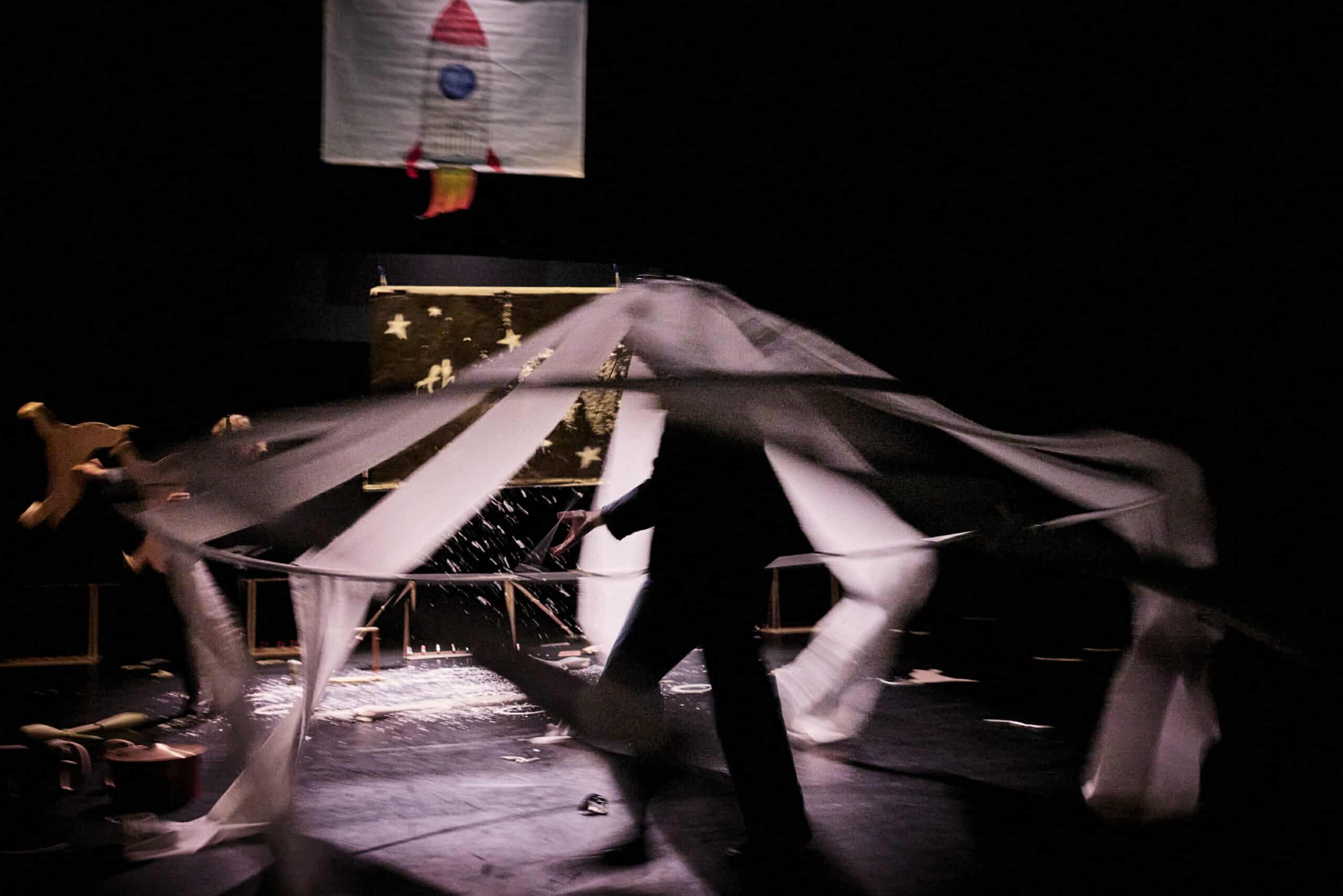
Even the show’s dramaturgy is structured as in a traditional circus show, and sequences are combined to create the full performance. On stage, we are three people juggling the space, making musical visual images. I was interested in exploring this kind of format because of its dream-like qualia: when you remember a dream, it comes to you in fragments rather than as a complete, long sequence.
What is your way of creating your objects, and how do your DIY props come to life?
David Martin: My DIY approach to creating props wants to revive an old sense of surprise, which is nowadays a bit less trendy, but which used to be the juggler’s practice. It’s the same as using fantasy to create images with simple resources. Object manipulation becomes a stage effect: I defined this effect as fairy juggling, in reference to the theatrical genre of fairy plays.
On stage, I use plywood, lots of balloons, tissue-paper confetti, cardboard, gaffer tape, a loop station, a fan, a cactus and a vacuum cleaner, mixing analogue with engineered props. Of course, it’s again somewhat about juggling and classical circus: in the show, I want to bring back Paul Cinquevalli, reproducing his act of juggling with water under an umbrella. My circular speaker looping the club’s beating is an homage to Philip Astley’s horses. The small tent structure is the symbol of the big top. In the voiceovers, I cite Jean-Michel Guy and Jani Nuutinen on the history of juggling, but everything is permeated with humour, and the sketches are in progress.
Who are your influences among artists that you can quote to define and locate your artistic research?
DM: The project is super rich in influences, going everywhere a bit, as a practice. I like to wander in art libraries and websites, exploring and making collections of various artworks, of various mediums and making connections. There is the field of the manipulators: the Language of Objects of Ben Richter, the poetic and musical tools of Atelier Lefeuvre-André, the craftsmanship of Johann Le Guillerm, the synesthetic juggling apparatus of Jorg Müller. There are also the balances and chain reactions of Fischli & Weiss, the anonymous sculptures of Roman Signer, and Calder’s Circus. There are the fragmentations, the « object as subject » writing and the Koulechov Effect applied to circus of the Collectif Mosjoukine for sure.

What is your relationship with the other artists on stage with you?
David Martin: Simon Malmsten and Mirco Morreale have both been my classmates at SKH. Simon is a flyer on the teeterboard, Mirco is a stage technician. They have always been involved in Metaphoric Objects since its beginning. They are somewhere between stage managers and performers, dealing with musical and visual images, but the juggling is all on me. They are also good at building props and inventing crazy solutions.
How did circusnext intersect with your creative project, and what impact have its activities had on it?
David Martin: Riga Cirks, one of the 25 platform members, is the oldest circus building in Europe. Presenting a work-in-progress there as part of a circusnext laboratory has been exciting because of the in-situ resonance between the traditional circus building and the scenes presented; it was a meeting between an old circus revisited and an interaction with the audience, contemporary as Metaphoric Objects is.
Broadening the view, circusnext validated my research, connecting the project with international partners to shape its final form. We are still in the process of sculpting the sequence of scenes that will compose the show, now titled Mechanics of a Dream Machine. We are going to premiere in the spring of 2027.

Jef and Marica’s In Difference: when the kinetic force of a contrast creates harmony.
Around About Circus · By Valentina Barone
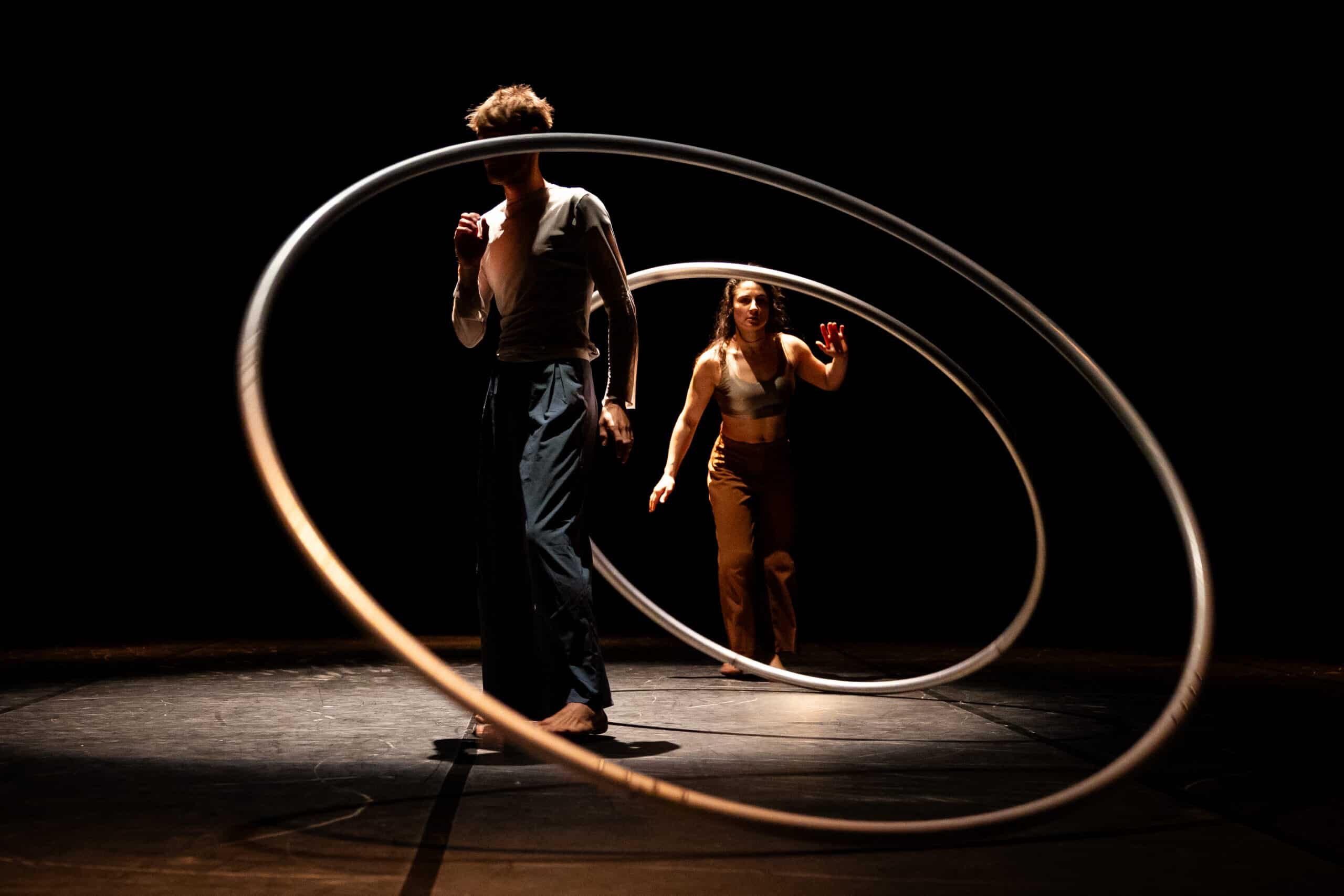
Jef Everaert and Marica Marinoni have transformed their individual technical masteries into a common artistic creation. Both artists attended the same schools, first training at the Flic preparatory school in Turin, Italy, and then graduating from the CNAC in France, establishing themselves as two of the most interesting performers on the European Cyr Wheel scene. Their show In Difference explores how two opposite personalities can share common space and elicit a unique encounter with an apparatus. On stage, the two engage and clash in their search for common ground, with the wheel acting as a third character, fueling a dialogue based on physical, emotional, and human exchange. As gravity teaches us, balance is constantly in motion. In Difference embodies that tension, transforming it into communication. Drawing on the energetic momentum of a kinetic difference, two masterful techniques become a dance between distance and proximity, between stillness and extreme dynamism. For this circusnext interview series, I met the two artists in Turin on their Italian debut.
Let’s start with a key question. How did you meet?
Marica Marinoni: In contemporary circus, those who perform the Cyr wheel belong to a small community within an already niche genre. It’s a very close-knit circle! We both attended Flic circus school in Turin and met there, when Jef was still a student, and I was visiting. We graduated from CNAC three years apart, which isn’t long enough to create a real distance. With Juan Ignacio Tula, the author and founder of Cie 7 Bis, with whom I created my first solo piece, Lontano, in 2022, the generational gap is more evident. With Jef, however, I feel a more equal bond.
Jef Everaert: I started studying Cyr wheel at a Belgian secondary school, two years before joining Flic circus school, so the funny thing is that, despite a five-year age gap and three years of school in between, Marica and I have been practising Cyr wheel for the same amount of time.
What role did mentorship from dramaturgical aids and support from other organisations play in the development of the show?
Jef Everaert: When you start working as an author, it is essential to have people around you whom you trust. You need guidance, and especially at the beginning of a creative process, it is important to feel supported, to surround yourself with people who care about what you do and back you up. In Difference also stems from the decision to be supported by people with a similar approach, with whom we already had a relationship. For this reason, both Francesco Sgrò and Juan Ignatio Tula were subsequently involved in the work. As for knowing how to manage an artistic project, I, being in my first experience as an author, find that Marica is to me the mentor that those two were to her.
Marica Marinoni: In Difference is my second artistic project, but it’s my first experience as a co-creator and joint lead. In this collaboration, Jef and I are on equal grounds and make decisions together. We’ve always said that it takes two “yeses” to make something happen, and we stick to this principle. Today, we can say we’ve won our bet, whereas at the beginning we weren’t quite sure if or how we could work together. The project got off to an uncertain start, but thanks to a series of fortunate and amusing coincidences, it was immediately clear that we had to give it a go.
The first person to point out quite clearly that we should create something together was Francesco Sgrò. A full five years ago, almost as if seeing us work together was a foregone conclusion, a natural step that was bound to happen sooner or later.
The years passed, and we came to July 2022. Jef had just finished Les Échappées and had recently begun work on the year-end collective production. His personal project caught the attention of Cirq’onflex, which contacted him to hear more about his plans. Around the same time, I was on tour in Auch at Circa, performing my solo piece Lontano. We spoke, and from that moment on, it was obvious to both of us that we should take the first steps towards securing support for a joint project.
Jef Everaert: Thanks to Cirq’ônflex, in 2023, we had the opportunity to take part in three residencies, which we used as research workshops. Firstly, we gave ourselves the freedom to explore and experiment together without the pressure to produce anything, simply to see whether working together was actually a viable option. It was only in January 2024 that we began the creative process for the show.

In the meantime, you’ve decided to apply to circusnext. What motivated this decision?
Jef Everaert: Of course, we knew what the process involved and were already in touch with people who had taken part. We were certainly motivated by the thought that this would be Marica’s last chance, given that In Difference is her second solo project.
Marica Marinoni: The process drove us towards research and its evolution. Our ongoing interaction with the jury and the other participants challenged us and motivated us to identify aspects we hadn’t yet recognised. Building a narrative around our research and being able to articulate in words what we wanted to convey on stage was very helpful in better understanding which direction to take. Being represented with In Difference among the graduate projects is a huge recognition that has given us legitimacy and visibility. Above all, it has brought us into contact with countries where we had never previously performed individual projects.
In retrospect, I am glad I participated in a well-prepared manner, approaching the process with awareness to achieve artistic coherence. Crafting a bespoke presentation—not to be understood as a finished form—is an exercise in itself. Working on three fragmented scenes made sense for the dramaturgical coherence of the twenty minutes.
Although your work is conceptual, you are both highly physical artists who focus on technique. How did you come to establish your creative approach?
Marica Marinoni: At first, I found it very difficult to explain the personal exploration of our relationship on stage. Some people didn’t understand what we were trying to communicate through the technique. They saw the movements, but not their meaning. Personal expression and technical exploration coexist in both of us in a very similar way, and it took a while to bring this quality into focus. Talking about our project often felt reductive to me, whereas performing it in front of an audience always led to more intense reactions. Even today, I find it difficult to put into words what the show conveys on stage.
If we were to talk about a triangle of values between you and the wheel: what does the Cyr Wheel mean to you, and what is your relationship with it?
Marica Marinoni: Through the Cyr wheel, I’m able to express who I am and what I want to say: I’d struggle to communicate in any other way. I find that offering your body on stage is an act of generosity, a moment when you give yourself to others, evoking emotions in those watching you.
Jef Everaert: Although we had the same teachers and shared the same working methods, it is clear that we have a completely different approach to the apparatus. Marica speaks more from an instinctive point of view and has a more emotional and dynamic approach to technique. For her, the wheel is at the service of the body. I am more reflective and approach the wheel as an object manipulator would, because I come from a juggling background. My insights stem from reflections on how the wheel moves, rather than from a movement and its reaction. I put my body at the service of the object: with my body, I try to make the object do things, rather than having the object make my body do things.
Marica Marinoni: In other words, I use the wheel and gravity to make my body appear to be flying, while Jef uses anti-gravity to suspend the wheel in space-time.
Jef Everaert: Even if I can identify myself strongly with this state of stillness, for me, interacting with the wheel is not just about balance. During Flic and CNAC, I began observing other artists, particularly jugglers, asking myself what I particularly liked about their technique and how it might influence my own. Manipulation, balance, and contact were already the basis of the things I worked on. One day, I saw Marianna De Sanctis during an improvisation with the hula hoop, and realised that the same movement and the resulting balance of the object on the body could also work with the Cyr wheel. A contemplative imagery immediately opened up to me, in stark contrast to what one usually expects from its use. It was like gaining access to a new physical vocabulary and concepts that I could bring to the stage.
What led you to discover the creative journey of In Difference?
Marica Marinoni: Our collaboration stemmed from our shared passion for the Cyr wheel itself, combined with a deep mutual respect. Having seen Jef’s solo project, the initial idea was to revisit the setting he had devised for his project and see how we felt working together there, because at first it seemed to us that there was room for both of us. Yet, the further we progressed in the process of creating the show, the more we realised that Jef’s setting was a false lead. The tree on stage, for example, was very limiting; it belonged more to him than to me, and in this we were not equal. Its presence prevented us from creating something from scratch, something that was entirely ours but built from a starting point of equal possibilities.
Jef Everaert: We needed to start with a blank page that belonged to both of us. Now, the balance we’ve found for In Difference is all the materials we’ve worked on together from the very beginning. Adding dynamism and stillness to both of our individual practices has allowed us to push our individual research further and turn it into shared ground. We wanted to go beyond our technical limits and amplify them through our relationship with one another. The performance has this quality: it creates osmosis within difference and individuality within shared ground.

Which other artists have been involved in this project?
Jef Everaert: Francesco Sgrò, who also composed the music, was one of the first people we brought on board as an artistic collaborator in the broadest sense. The decision to work with him felt natural because he already knew us well and understood how to deal with our different approaches, personalities and needs.
Marica Marinoni: We also brought in Juan Ignatio Tula, primarily to work on the physical material, and involved Alexander Vantournhout for the overall dramaturgy, who helped us confirm the order of the scenes to achieve a conceptual and sensitive result.
Jef Everaert: When you learn a basic move and perform it repeatedly, the magic of doing it fades, yet the surprise remains for those watching. Some things seemed ordinary to us, but they aren’t to the audience. Sometimes you need someone outside your circus know-how to see you perform and help you understand what you’re trying to express in a narrative sense.
Marica Marinoni: Where a simple rotation might seem superfluous to us, it is at that very moment that the audience breathes a sigh of relief and the energy rises. From a dramaturg’s perspective, the attempt to balance on the wheel together highlights our desire to connect with one another and our failure to do so. A simple movement is important because it also represents the first step in a variation; it is the first element of a technical language that you will see evolve. This is why it seemed right to us to involve people from outside the circus world, such as Marie Ballet and Guillaume Servely, to make our language accessible even to those unfamiliar with the circus and the Cyr wheel as such.
How did the circusnext workshop support your creative process?
Jef Everaert: We participated in the workshop in Serbia run by Cirkobalkana, and the experience gave us the chance to work in a way that was less technical but more focused on understanding what we wanted to express on stage. Working together during that workshop gave us a new sense of depth.
Marica Marinoni: It made us aware of what we have in common, as well as our differences. This is extremely valuable because when you want to address diversity, you have to look at it from every angle, including its opposite: togetherness.
Since the beginning, the technical side was already there, we’d got the hang of it, and everything was going well, but the bond between us came later. At the start, there was a sense of osmosis, which then expanded thanks to a slow process that allowed us to focus on one another. It was as if we were technically too close to be able to see our differences. The creative process taught us that getting to know one another is not a given, nor is discovering how and in what we are different.
Your stage presence is like a statement of personality without a specific character. Yet the natural contrast in character comes across powerfully through your stage movements. What challenges have you faced in developing your artistic partnership, and what have you learnt about yourselves, both as performers and as people?
Jef Everaert: On stage, it’s just the two of us as circus performers. We don’t play characters: it’s as if we were just ourselves, only a bit more exaggerated.
Marica Marinoni: I laugh because my sister, for example, gets annoyed when she sees me on stage, because to her I’m very much like my real-life self on stage; she says I’m predictable, that she recognises me as a person.
Jef Everaert: Before I got started on this project, I used to work with people who had a similar creative approach, whereas Marica and I work differently.
Marica Marinoni: For me, there’s always a creative quality in facing something unfamiliar. For Jef, conflict is a shock, and he avoids it at all costs. Yet the theme of difference originated with him and has enriched the project enormously. We had an idea for the show, and we relaxed rather than trying to dominate the other or impose our egos. Let’s say we worked towards a collapse of the ego for the greater good. From Jef, I learnt humanity. I realised that sometimes, by remaining kind to people, things evolve and often resolve themselves. And then I saw that every conflict made us grow; there was always a marked improvement; confrontation became our strength.
Jef Everaert: Everyone who knows us individually is now surprised when they see us on stage and tells us that we look more alike. I am now more like Marica in the way I perform, and Marica is more like me. For me, this means being more in touch with the pure movement and the world of abstract choreography; for her, it means being more in contact and exploring the potential for humour and theatrical play. For both of us, the project represents the freedom to explore many styles and experience a human connection. From Marica, I’ve learnt that if you want something, you have to go and get it, and that sometimes you can be more persistent, stand up for yourself a bit more, not accept things you don’t want to accept, stay in the process, take care of things, and be more active and practical about the things that need to be done. We’ve both learned how to be project leaders together.
What plans do you have in the making for the future?
Marica Marinoni: We are a duo collaborating on an artistic project, but we have maintained our individual identities whilst working together, without setting up a company. We want to take the project on tour as much as possible. In Difference is currently our priority. From my experience, I know it is entirely feasible to make room for other individual projects as well, which will undoubtedly enrich our stage presence.
Jef Everaert: Given that the performance draws on a very broad artistic vocabulary, we can extract specific sequences, which allows us to be flexible and experiment. We want to work with a live musician and create an outdoor, site-specific version of the project. It will be interesting to develop a format suited to a site that is different each time, an aspect that will undoubtedly enable us to expand our artistic language even further.


Fenja Barteldres © Oskars Upenieks
Yotam Peled & the Free Radicals, Destroy me · Acrobaties au sol, harnais aérien, corde
Comité de présélection (27/04/2026) : Bernd Belschner, Stefan Hort, Josa Kölbel, Elena Kreusch, Arne Mannott
Fabian Krestel, Length of time · Jonglage
BEYONDSIEN (Sien Van Acker), Fluffy World Domination · Fil de fer, clown
Comité de présélection (24/04/2026) : Aukelyn Allary, Jef Everaert, Alex Godefroid Cornil, Elena Kreusch, Valentine Remels
Seon (Daniel Esteban, Andreu Casadella), Bumbalum · Boule, acroball, clown, équilibre sur la tête
Maria de la Parra Guerra, Suspendida · Corde, mouvement
Otra Vez Lunes (Mariana Fernandez, Sofia Demicheli), This Is Not a Love Song · Trapèze fixe, danse, théâtre, fakir
Luana Flores, Urdimbre · Acrobaties au sol, danse, crochet
Comité de présélection (14/04/2026) : Sandra Arisa, Eva-Luna Garcia, Joan Ramon Graell, Thiago Souza, Zed Zanzu
Heidi Miikki, Hope · Danse verticale, acrobaties aériennes, acro-danse, musique aux claviers
Comité de présélection (08/04/2026) : Sade Kamppila, Gry Lambertsen, Jarkko Lehmus, Kiki Muukkonen, Elena Stanciu, Zed Zanzu
Collectif La Barque Acide (Steph Mouat), EX5 · Acrobaties au sol, équilibre, film, photographie, musique électronique
Collectif Primavez (Ricardo Pedri), HEAVYMETAL · Acrobaties au sol, suspension, nouvels agrès de cirque, danse
Alice Langlois, ORLANDO · Trapèze fixe
La chose est fine (Zuzana Drobna, André Hidalgo), tACTILUS cONTACTUS · Jonglage, danse, parole performée, magie nouvelle
Collectif Tombé du Nid (Federica Peirone), Tu Be or Not To Be · Équilibre, antipodisme, musique live
Comité de présélection (10/04/2026) : Lise Hoëz, Lorraine Burger, Lucie Charlotte Perrusset, Carlos Vianna, Sylvie Cadenat, Marie Chapoullié, Géraldine Werner, Margot Videcoq, Molly Saudek
Detached.collab (Elaine Mc Cague), Irriversible actions · Sangles aériennes, acrobaties au sol, corde lisse, corde ballante, capilotractage
Comité de présélection (30/03/2026) : Louise Bjurholm, Jordis Cordua, Lucho Smit, Miriam Zwanenburg
Valeria Zavattoni, Who killed the cat? · Équilibre, absurde
Del Caravaggio (Alessandro Travelli), Abel · Acrobaties au sol, contortion, danse, théâtre, manipulation d’objets
Cie Callea (Alice Binando, Donatella Zaccagnino), Edere · Corde, clown
Comité de présélection (09/04/2026) : Giovanna Milano, Teresa Noronha Feio, Alessia Pinto, Clemente Tafuri, Boris Vecchio
Stichting Emilie Weisse circustheater, The boiling frog · Sangles aériennes, main à main, capilotractage
Comité de présélection (30/03/2026) : Louise Bjurholm, Jordis Cordua, Lucho Smit, Miriam Zwanenburg
Jessica Lane, DIAPHANA · Marche sur bouteilles, théâtre
Circo Kampung (Alvin Yong), Ikat Tepi · Diabolo
Comité de présélection (10/04/2026) : Claudia Berkeley, Bruno Costa, Vasco Gomes, Ana Moraes, Teresa Noronha Feio
Filip Zahradnický, Nothing to see here · Jonglage
Comité de présélection (17/03/2026) : Antonia Kuzmanić, Milan Manić, Sarka Marsikova, Molly Saudek, Jadranka Žinić Mijatović
Tri groša (Danka Sekulovic, Ana Pinter), It’s ok to hypnotize a chicken, but rabbit gets traumatized · Antipodisme, multimedia
Comité de présélection (17/03/2026) : Antonia Kuzmanić, Milan Manić, Sarka Marsikova, Molly Saudek, Jadranka Žinić Mijatović
Rikard Holmstedt, Temporary Sculptures · Jonglage, sculpture, travail du bois
Comité de présélection (08/04/2026) : Sade Kamppila, Gry Lambertsen, Jarkko Lehmus, Kiki Muukkonen, Elena Stanciu, Zed Zanzu
Finn Waltersmann, Umefiguretle · Jonglage
Comité de présélection (27/04/2026) : Bernd Belschner, Stefan Hort, Josa Kölbel, Elena Kreusch, Arne Mannott

© Jona Harnischmacher
Holding on to everything I’ve got (S’accrocher à tout ce qui me tient) est une pièce de cirque contemporain autour de notre lien à la Terre. L’artiste tisse des parallèles réels et imaginaires à travers son corps, les objets avec lesquels elle évolue, et l’héritage culturel, terrestre et familial qui la façonne. L’enjeu est de créer un cirque à la fois intime et politique, une manière de percevoir comment nous détruisons non seulement les paysages qui nous entourent, mais aussi ceux qui nous habitent.
En questionnant sa propre biographie, Verena explore les présences familiales qui la façonnent et révèlent la complexité de cet héritage terrestre. Accompagnée d’un musicien, elle met son corps à l’épreuve pour incarner ces ruptures et leurs conséquences écologiques.
Un cirque qui s’éloigne des fantasmes de contrôle pour une pratique fondée sur la relation, l’interdépendance et la recherche d’un pouvoir d’agir partagé.
Verena Schneider est une acrobate, performeuse, circassienne et artiste interdisciplinaire autrichienne dont le travail se situe à la croisée du cirque, de la danse et de la performance. Formée aux arts du cirque (Le Lido – Toulouse, FLIC Scuola di Circo) et à la chorégraphie (CodArts / Fontys), elle mêle dans sa pratique l’équilibre, l’acro-danse, la manipulation d’objets et la recherche chorégraphique pour développer un langage circassien personnel. Elle est cofondatrice de la compagnie Kumquat avec Charlotte Le May à Toulouse, ainsi que de l’association viennoise Freifall.
La recherche de Verena s’articule autour d’une pratique du cirque introspective. Naviguant entre blessures et exigences artistiques, elle cherche à placer l’écologie du corps au centre de sa démarche. Dans ce processus, elle explore comment l’écoute du corps peut devenir un acte de résistance ; un guide pour reconnaître la vulnérabilité, l’échec et l’interdépendance. Cette pratique en mouvement lui permet de faire évoluer son cirque tout au long de la vie, avec tendresse et soin, en lien avec les paysages changeants qu’elle traverse.
Sortie de résidence – Vendredi 29 mai à 17h
L’Espace Périphérique – 2 rue de la Clôture, 75019 Paris
Inscriptions : reservation@circusnext.eu
